Showing posts with label Greg. Show all posts

Wednesday, May 20, 2026

Book Review - The Trick of Singularity by Kurt Schauppner

The Trick of Singularity
By Kurt A. Schauppner
Reviewed by Greg Gilbert
Available at Raven's Bookstore
69225 29 Palms Highway, Twentynine Palms

 The discerning reader may question the neutrality of a reviewer who was an early editor of Kurt Schauppner’s book, particularly as the review is provided at the request of the author’s publisher and the dedication is to us both. My unbiased suggestion: purchase the book and judge for yourself. Meanwhile, here are my thoughts.

    The title, The Trick of Singularity, suggests a point of infinite density, a state of uniqueness, and a place where physical laws break down; all of which are rightly applied to Schauppner’s book. For example, the narration is presented in past tenses, a topsy-turvy chronology wherein the first two-thirds occur in the recent past and the final one-third in the not-so-recent past, two stories that meet at common point, a singularity named Nathan Lee.

The passage of time is a character throughout the story. In the beginning, Nathan Lee is old, and in the end, young. In both time frames, his proximity to the loss of a loved one is mitigated by his state of being at the “time.”  In the beginning, the protagonist is referred to as Mr. Lee, a formality that is  appropriate for his advanced years. In the book’s conclusion, earlier in Nathan Lee’s life, he is Nathan, a newsman, a member of a profession that’s on life support.

The first two-thirds of the book is set in  a senior center, a place where elders revert to grade school behaviors, where pharmaceuticals are dispensed like communion wafers, and where different rooms are aligned with the residents’ stages of decline. This is where we meet the curmudgeonly Mr. Lee and view the descending arc of his story prior to reading about his earlier ascending arc in the book’s final third.

 In the beginning, which is the conclusion, Mr. Lee’s roommate is The Duke, a solitary figure who is occasionally aware of his advancing dementia. When clear minded, he is wise and insightful, and when he is lost, he is unerringly sweet and described as “the largely safe and asexual and therefore much-loved Mr. Duke.” The person who views the Duke in this kindly manner is, “a faded beauty who reminded Mr. Lee of Margaret Dumont,” a staple in many Marx Brothers movies. Once identified as such, she  remains Margaret throughout the story, the reference to Dumont another iteration of time’s relentless passage.

The all-at-one-point subtheme applies also to race. Mr. Lee’s father’s father was Korean and his father’s mother Japanese while Mr. Lee’s mother was “pure German.” Though a blend of races is not unusual in today’s world, it is germane to the story. Mr. Lee thinks of himself as White, even as the tragicomic tone of the first two-thirds of the book is reminiscent of Yiddish humor due to the author’s knack for transforming misery into comedy, albeit, at times, a bit dark.


The worst days are 100th birthday celebrations. Family members gather, staff members hang balloons and force hats and other bit of ephemera onto unwilling heads and into unwilling hands, a curiously-decorated cake is purchased from the local grocery store, a junior staff member from the local newspaper is summoned with camera, notepad and wide eyes to record the spectacle.

            A 100 year-old person, usually a woman because most men have the good sense not to live that long, is dragged out of her hospital bed, deposited into a wheelchair, wheeled into a dining room, placed in front of the cake and forced to wear a festive hat that will, at the end of the day, be thrown into the trash and begin it journey to a rapidly-overflowing landfill.

     Overall, the first two-thirds is more humorous than the final third of the book, and that feels right because age is often accompanied by a long view that cannot help but be amused at our shared human folly even as we suffer the pains of decline. The more serious tone of the last third involves a younger Nathan Lee whose unfolding life recalls for the reader how it all concludes in the first section. (No spoilers here.)  

    Young Nathan Lee is a photojournalist for a newspaper inherited by children who decide that “it would not be fun to run a newspaper,” a reference to Citizen Kane and yellow journalism. One day, Nathan photographs a dying man at the scene of an auto collision, and, as a result, suffers the resentment of the man’s loved ones, a story that parallels the decline of his newspaper and the failing health of his true love. Within the arcs of this section, Lee’s true love is “a joyfully zaftig man in the manner of Jackie Gleason or late in life Orson Welles,”  a largeness that anchors young Nathan while sending the book’s younger readers to their search engine of choice. 

    Nathan’s uniqueness is a point where societal norms break down. He is a multiracial man in a profession that, like his true love, is both candid and dying. He is a gay man in a community that views such as an abomination. A neighbor who has made cookies for her grandchild’s church school bake sale has asked him not to attend because, “Oh, well, it’s at our church school and most of those folks are a little more conservative…” even though “everyone knew how neat and clean gay people were.” Though never didactic, this is a book that contextualizes the lives of its characters within the cultural and political milieu of modern life.

    What Kurt Schauppner has provided is a playwright’s novel, a book rich in stage direction, conflicts, and memorable characters. The trick is that the youthful Nathan Lee we meet in the book’s conclusion has yet to become the elder Mr. Lee who we  come to know at the beginning of the book. Thus, the final trick of singularity is achieved within the reader, a point where Mr. Lee, young Nathan, and our own mortality become entangled.  

    A final note: The Trick of Singularity was written and published within our community and, thus, is not the polished gem that multiple editors and publishing teams have scrubbed for a mass market. There is the occasional editing oversight, but this is a substantive and intelligent story by an author of several books, an editor of our local paper, and a neighbor. There are talented authors throughout our high desert and a remarkable little indie publisher, Cholla Needles. When we support them with our patronage, we enrich our sense of community. The Trick of Singularity is a worthy addition to our local canon.


Tuesday, June 18, 2024

New Book! HOWL's Legacy edited by Greg Gilbert


edited by Greg Gilbert
in association with Mojave Sage Writers

Cover & inner art by L. I. Henley
Additional inner art by Chloe Allred

Literary contributions by:
Nathan McClain
J.J. Starr
Greg Gilbert
L.I. Henley
Jenna Baillargeon
Michael Green
Michael G. Vail
Kent Wilson
Renee Gurley
Brenda Littleton
Wendy Costello
& lalo kikiriki


Tuesday, October 31, 2023

Book Review - Becoming Forest by Michael Kearney

Reviewed for Cholla Needles by Greg Gilbert 

Sweet, simple, and profound. 

Becoming Forest is a lovely little book, 234 pages. Its tone conveys a sense of reverence for the natural world without becoming strident, didactic, or saccharine. Its simplicity is that of a close observer, a narrator that is absorbed in the present moment. Its profundity is in what is being seen, the viewer’s inquiries, revelations, and conclusive sense of purpose. The book opens when a young woman who lives in Ireland, Aishling, receives a travel voucher from her grandmother, Greta, so that she can join her in Santa Barbara, California.

Greta’s husband – Aishling’s grandfather, Bran, has recently succumb to COVID-19. He had died in the same hospital where he’d worked for many years as a doctor providing palliative care to help free people from suffering. In her grandfather’s journal, Aisling reads about a “Vision Quest” he’d once made to the Bodhi Tree in India, the site of Buddha’s enlightenment. Also in the journal is a letter to her explaining that he had journeyed to India out of a deep concern over the climate crises, mass extinctions and the uncertainty that young people are inheriting. In the letter, he asks her to pass along to others a message of “deep security.” As a result, Aishling makes her own journey to the Bodhi Tree where she meets a young monk. They travel together and we accompany them. Their travels are revelatory.

Years later in 2050, Tara, Aisling’s daughter, travels from Ireland to be with her mother after the death of her father, the young monk Aisling had met thirty years ago. As with her great-grandfather and generations of women in her family, she too has become aware of the happiness and sense of fulfillment that can come with creating resilience wherever you are.

The structure of Becoming Forest is in many ways a Buddhist story of life cycles and awareness, and, appropriately, of our vast connections to and within the natural world, beliefs that are central to many ancient and indigenous cultures. At the center of the story is the tree of life. Tara recalls her father’s words. “‘Think about it: Catholics have St. Peter’s Square, Jews have Jerusalem, Muslims have Mecca, and Buddhists’ he paused, and then said with a grin, ‘What do we have? A tree!”

 Of course, in today’s busy world of screens and stress and double-shot lattes, the old wisdom found in sitting with a tree may appear too new age or pastoral for the serious mind. But then, there is the moment when Tara recalls her father pausing while tree planting to listen to a bird’s song. “‘Do you hear that? That’s what lively awareness sounds like.’ Or, ‘Look at the trees. They’re manifest awareness. Always right here, essential yet unassuming.’” A scientific explanation is offered as Tara explores a burn zone in 2050 and finds that a favorite old tree has died. She recalls a teaching from her mother, the “Mycorrhizae Sutra.” It speaks of “how the roots of trees connect with underground fungal filaments to form a vast web.” At the time of death, a tree will pass an enormous catalogue of benefits, chemicals, and carbons to the roots of surrounding trees, a network that provides for shadowed trees in need of sunlight and unhealthy trees as well, each according to its need.

Becoming Forest reminds us that all trees are the BodhiTree and, by extension, that we are all are part of a universal web of being.

The book is illustrated with Zen brush paintings by Tess Leak. Her YouTube site explores loss through the creation of haiku.

To learn more about Michael Kearney and his work, click here to visit his site.

- - -

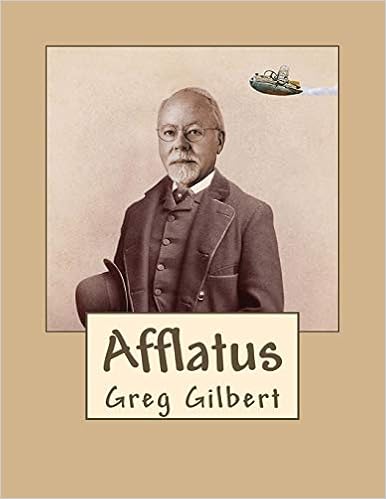
Greg Gilbert is the author of Afflatus & Butchy's Rainbow.

click on cover of each for more info =:-)


New Book! Butchy's Rainbow by Gregory Wallace Gilbert


In these pages, you’ll spend a night with a condemned prisoner, ride after Pancho Villa, watch death arrive on black wings, see a man fight for the lives of people as they are consumed by fire and acid. You’ll read about young love in the 1940’s, the loss of children, and the raw political intrigue and Gatsby scale partying that was the 1950’s. Experience the war years in Washington DC and VE Day in Long Beach.

Come with me and meet Tom and the Eddies as the world emerges from the shadows of a candlelit mystery into the naked glare of modernity.

-- Butchy


Friday, September 15, 2023

Writing Meditation by Greg Gilbert on Sun House

Sun House by David James Duncan
Meditation by Greg Gilbert

This is not a review of David James Duncan’s Sun House, more a Writing Meditation of gratitude. Sun House is a looong booook, which is one of its many attributes.


The novel’s length matters because it engulfs the reader in an immersive experience, “immersive” as in sensory and extrasensory stimulation. Sun House is rhythmic and embodies various forms of meditation, worship, prayer, awe, reverence, and zazen. An oceanic rhythm carries the lives of the characters as they experience duhkha, Sanskrit for suffering; discovery, and moments of satori, the genuineness of each passing moment, the eternal NOW.


When a boy’s mother dies, we embody his rage as he bicycles wildly through traffic. When a young Jesuit descends into a crises of faith, we suffer with him. As characters fall in love, the writing swells with their passion, becomes romantic, hopeful, euphoric, and at times disillusioned. In chapter length effusions of satori, Duncan surrenders his mindful prose to celebratory releases that lift away from the page like sea mist. These are important rhythmic, meditative elements in a book that is itself an experience. Think of breathing, taking it in and releasing it, becoming lost in thinking and then releasing your thoughts. Think of becoming enmeshed in the natural world, of being tested by it, physically enduring its challenges, and then finding release in its glaciated summits and healing waters.


In his afterwards, the author explains that our divided world calls for celebratory answers rather than ceaseless condemnations. Sun House is rich in information about the earth, its dwindling gifts and enduring miracles. The earth is as much a character as anyone in this epic story. Sun House is a love song to the natural world. Duncan reveals the musicality and interconnectedness in all things, wind, rain, and high altitude thermal ponds. His writing sings of the music in dulcimers, folk singers, electric guitars, human voices, and the natural world, all of it without cliché because his writing is centered in the authentic experience.


The author gave 16 years of his life to creating this gift, and among my friends are those who have awaited his new book as though it were a visit from a long separated loved one. Sun House is a smart, funny book, one that satisfied my longing for the wit, humor, and earth loving reverence of Ruth Ozeki, Richard Powers, Charlotte McConaghy, Herman Hesse, TomRobbins, Kurt Vonnegut, Edward Abbey, Gary Snyder (ants and pebbles / In thethin loam), Thoreau, Rilke, and too many others to name here. Sun House is aname for the earth.

If you give yourself the gift of this book, you will be paying it forward for David James Duncan and all of us who yearn for a time of healing.

-  -  -  -  -


Greg Gilbert is the author of Afflatus.

More info

Wednesday, April 12, 2023

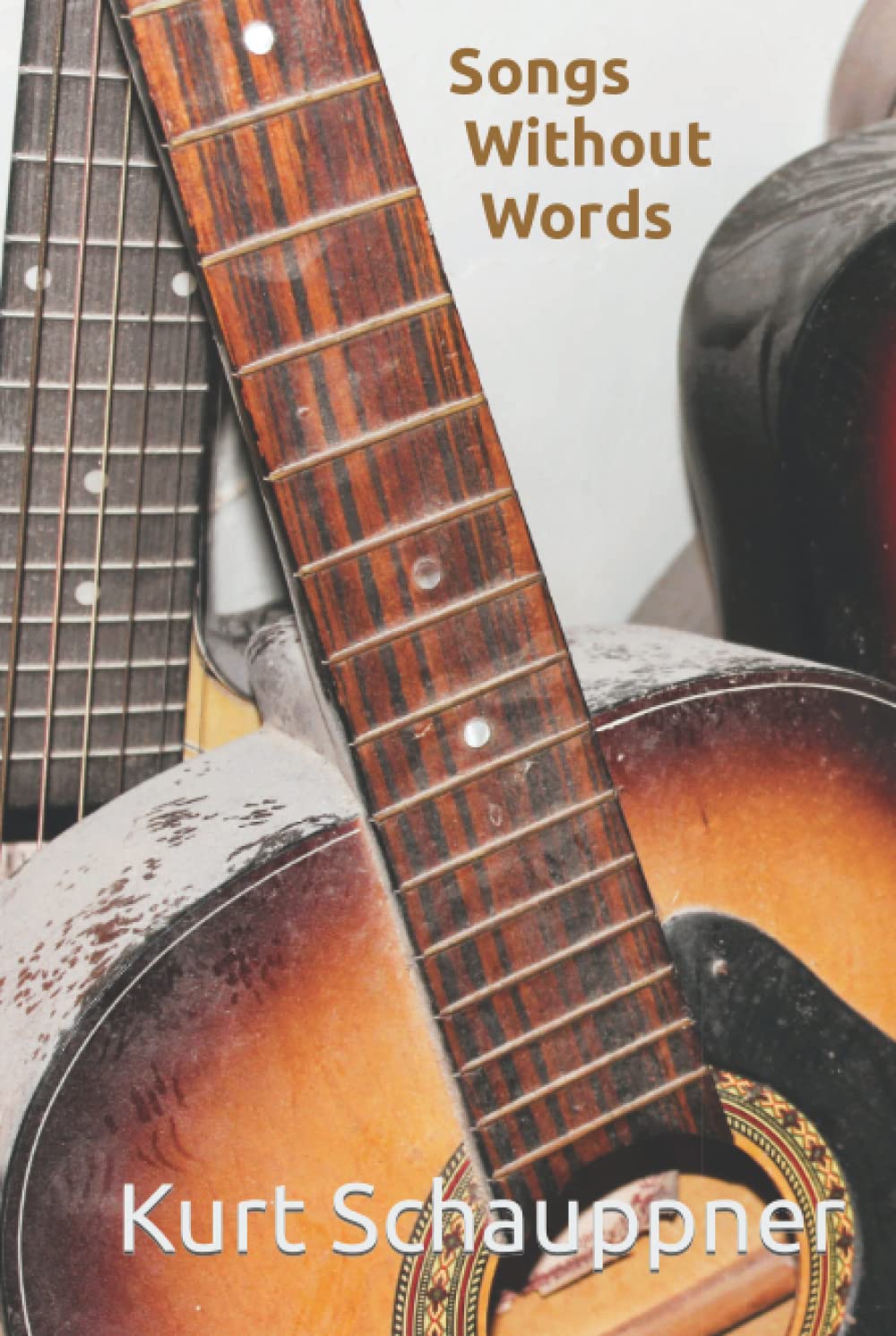
Book Review - Songs Without Words by Kurt Shauppner

Songs Without Words by Kurt Schauppner

Reviewed by Greg Gilbert

    Kurt Schauppner’s Songs Without Words is a collection of seven short stories and as many separate prose paragraphs. I thought the title an interesting choice considering that the book is a songless collection of words. A little digging reveals that Felix Mendelssohn composed eight volumes under the same title in the early-to-mid 1800’s, each volume containing six romantic and lyrical piano works. Schauppner’s foreword to his own work says that the stories are told without speaking, that “they are there and are not,” and they “are our loss and our failure to love.” One may ask, where’s the lyrical and wordless romance inferred by the title?


     To begin, romanticism in art and literature focuses on individuals who discover inspiration through their personal perspectives, and such is the central thread that connects Schauppner’s seven stories. Germane to the romantic mode is the esthetic and intuitive experience, often involving loss, a dark winged presence on the periphery or the absence of a loved one. Again, one may recall that Mendelssohn, a favorite of Goethe, was a gifted composer and director who died at age 38 and that his older sister by four years, Fanny, arguably his superior at the piano, died the same year. In referring to Mendelssohn, romanticism, and his sibling relationship and loss, the character of Schauppner’s stories find a consistent tone and theme, a world on the brink of being discovered and lost.


     As to the suggestion that the stories are told without speaking, the author employs a third person narrative style throughout, and while characters may comment, the quotation mark is never employed. Readers witness the stories from a slight distance, even while viewing the interior lives of characters. Each story employs a dreamlike use of magical realism where characters negotiate various dreamscapes and alternate realities in worlds where diseases test the resiliency of plans and even the survival of a social order. Characters occupy multiple lives and often view their journeys from a mythlike distance. People suffer and are helped only to help those who suffer. Asylums and hospitals and dreamscapes enter and depart as though they are characters in a larger story. Roads lead into distant existential wildernesses and the promises of lush mountainous realms. But always, there is the searcher, the explorer, the perennial student in a world that is disintegrating and reforming at the edges.


     As with the product of any small, overworked publisher, Songs Without Words would have benefitted from closer editing, but that doesn’t prevent me from recommending this collection. The stories are thought provoking and lead the reader into a mythological consideration of our world today. In many respects, this is a wise book that leaves us to consider our own untold stories, our losses, and loves. Its magic lingers after the book is closed.


Click here to purchase on-line ($6)


Also by Kurt Schauppner:


-  -  -  -  -


Greg Gilbert is the author of Afflatus.

More info

Friday, March 10, 2023

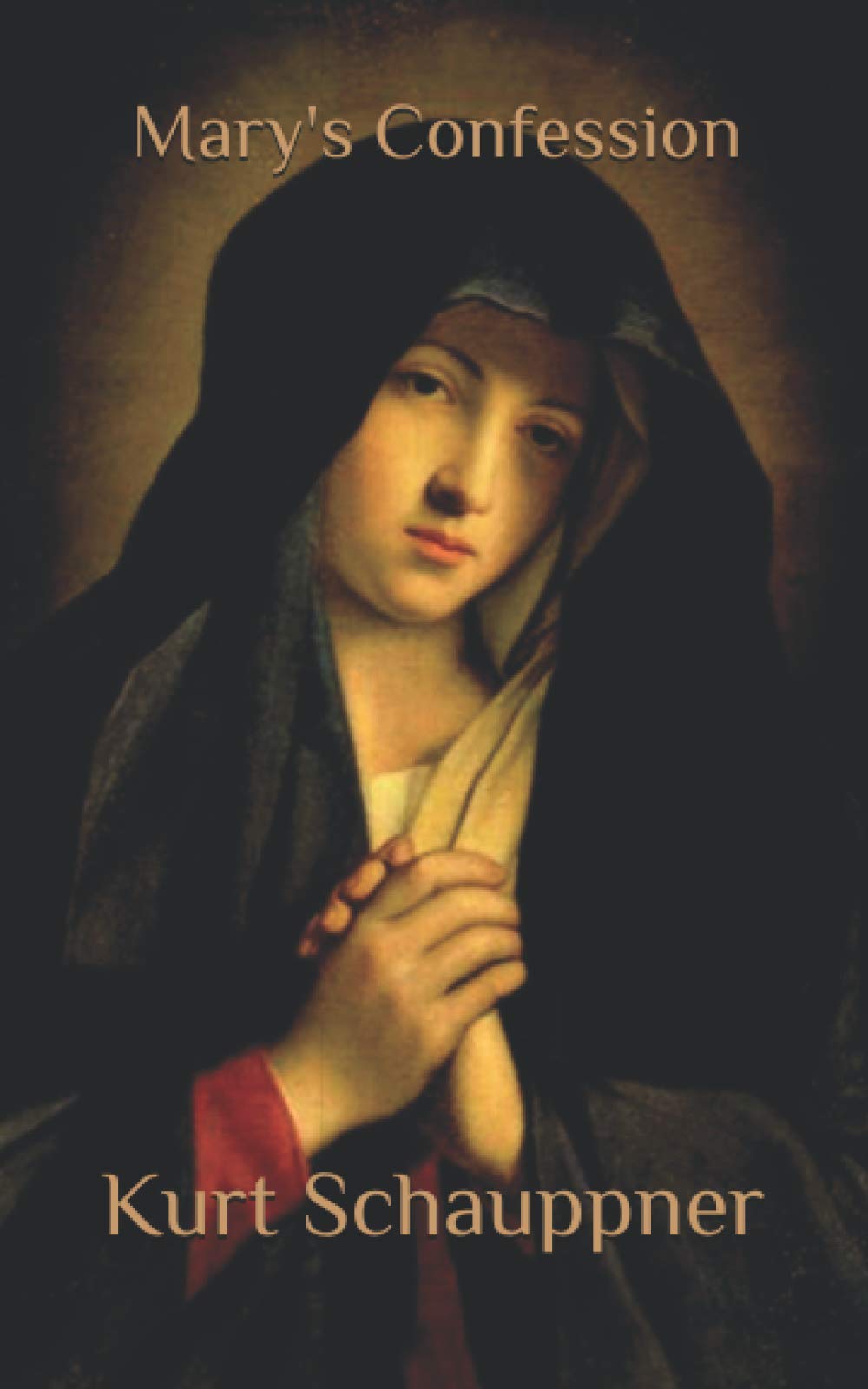
Book Review - Mary's Confession by Kurt Schauppner


Cholla Needles, 2020
Reviewed by Greg Gilbert

            Mary’s Confession by Kurt Schauppner is a gentle, thoughtful, and frequently witty free verse narration in the voice of Mary, the mother of Jesus of Nazareth. The overall musicality of the poetry is pleasingly engaging with succinct lines, each offering its own rhythmic punctuation and message.


                The confession referenced in the title is that of a mother who is timebound and struggles to navigate the dual nature of her son. Though she has been visited by a divine intermediary, an “errand boy,” she has not experienced directly the “terrible, frightening” voice of God. She has found herself married to “an elder carpenter” who was “willing to have” her, and she has been impregnated. A part of her wishes that she had spoken up, “had said something” to God: “If you are going to get me pregnant / You can at least put in an appearance / Zeus did and he did not even exist.”


                Mary’s glibness is never irreverent; rather, it highlights the dual nature that inhabits the entirety of the Christian story, from the original sin to her own view of her son.  While others see her son as a “troublemaker,” “healer,” “leader,” “messiah,” and “god,” she says that “he was ever and always / And never anything other than / My son.” She speaks of having seen her child “. . . chase butterflies and stare, / Bedazzled, at wildflowers.” This duality serves as a rhetorical device throughout the book. Mary’s narration occurs after her own death, from “heaven,” and, thus, provides a “perspective / you had not enjoyed in life.” As such, her story assumes the role of a heavenly intermediary that waivers between an omniscient past-tense perspective and a present-tense voice that is timebound and suffers the confusions and love that accompany her motherhood.


                There is a surreal duality to Mary’s narration as she describes a life where divine interjection becomes the norm, dreams that guide her elderly husband to have them flee into Egypt, and, thus, experience the relief of saving her child while lamenting the slaughter of the innocents, “mothers / Who have been forced to stand / And watch while their children / Were put to the sword.” In such moments, the reader will appreciate that the earthbound and heavenly incarnations of Mary both understand that there will be a horrific reckoning for her own son. “I wept because I knew that / Soon enough / I would know their sorrow.”


                Meanwhile, there is the day-to-day, “The years I spent chasing after / The Savior of the world / Cleaning up his messes.” The “Savior of the world” offers perhaps my favorite example of duality. One can hear the Jewish mother’s tone, not one of outright mockery but instruction, a voice that brings her son back to earth. You can save humanity after you pick up your clothes!


                In another instance, Mary asserts her role and pushes her son to make wine for a wedding. He proves himself “a superior / Sommelier” who goes on to “spread a handful of loaves and fishes / among several thousand.” She sums up these early miracles as only a mother would. “Any caterer who can pull off a trick like that / Has a fine living waiting for him.” As if in answer to any thought of salaried work, Jesus routs the moneychangers, and she concludes, “ . . . my son was never much of a capitalist.”


                There is so much more that could be said about Mary’s Confession, her views on the disciples, on John the Baptist, Lazarus, and the importance of various notable women of scripture, each a manifestation of her own duality and strength, but I’ll leave that to future readers to explore. What should be apparent is my admiration for Kurt Schauppner’s take on her story.


                Interpretations and speculations concerning the life of Mary have become their own genre, some, like the Gospel of Mary that date back to the second century. Various ancient writings conflate Mary, the mother of Jesus, with Mary Magdalene as the first woman apostle, an individual whose intelligence and devotion to Jesus the prophet and man were disavowed by such as Peter, allegedly due to a combination of jealousy and sexism. Of note is that Schauppner’s Mary provides an effective and liturgical leveling of key disciples. Another speculative publication on the mother of Jesus is Colm Tóibín’s 2014 prose novel, The Testament of Mary, which would serve as a good companion piece to Confessions.


                Christianity’s heaven/hell duality offers an extraordinary menu of conflicts for writers and thinkers to explore, from Augustine to Kazantzakis. While one need not be a believer to appreciate such literature, no thoughtful reader should take offense. The blacklisting of such as The Last Temptation of Christ is, in my opinion, small minded. Such speculative works explore the psychological depths involved in principled and self-examined lives. Kurt Schauppner’s Mary’s Confession is a worthy addition. My singular complaint is that it shares space with Mr. Schauppner’s poetry and journal entries. While they are notable in their own right, their presence undermines the singular voice of Mary, which I believe should stand on its own merits.


Click here to purchase on-line ($6)


Also by Kurt Schauppner:


-  -  -  -  -


Greg Gilbert is the author of Afflatus.

More info

Tuesday, January 24, 2023

Book Review - This Side of the Fire by Jonathan Maule

This Side of the Fire by Jonathan Maule

Reviewed by Greg Gilbert, Professor Emeritus/Trustee, Copper Mountain College, Joshua Tree, California


How many times did I set this book down, mid-poem, at a phrase, an image, and stare into my own depths, lost within the sharp profundity of the moment? Page after page, no decorative contrivances, but poetry as scalpel, filleting layers of memory to translucence. Maule does not spare himself nor the reader. His poetry is a stunning mix of self-evisceration, absurdist humor, beauty, and insights. He asks, “Have you ever witnessed the death of your ego? / a complete oyster-shuck detachment of self?” He convinces himself “that everything abandoned / is kin,” and we, the audience, are drawn into his complex singularity, a dynamic unity as varied as a clenched fist or an instant of exultation.


This Side of the Fire is comprised of four sections and opens with “Letters to Red,” epistolatory poems that strive to fill the negative space left by his sister: “my mind is not a cage / I can render you here.” He can see her “bringing water to a child / or tucking bullets into the sleep of a magazine.” The author asks, “would I trade you being gone / for what I’ve written?” He says, “I never gave you […] a poem you may fold / into a star.” “Letters to Red” are at once penance and absolution, poems that broke my heart and spilled love into me.


Section II, “Idaho,” serves up the artist as a young man “who blew up mailboxes [and] said so many / stupid things to young women.” The poetry is spare and unsparing while recalling the suicide of “S,” “Anyway, we’re all headed for more death and words.” Maule recalls the summer his father came home after flying over “oceans of Sitka spruce” looking for oil leaks, their days cutting linoleum, roofing, and then the separation, how he “watched him fly away / a coin sinking into the well of the sky.” He writes of his mother who “sang hymns / stirred butter into macaroni / and with the same wooden spoon / played him like a drum.” Memories unspool, truancy from Boise High, boys being boys, nights “pitching empties like sardines,” “a fur of cannabis and pills.” And young Jonathan Maule performing his music at the white Baptist church, “no backbeat, nothing in the shape of a gift / for women and their hips.” The first two sections move us through time, a retrospective of loss and of a young man trying to find his way.


Section III, “California,” and the author has migrated to Hollywood where he waits tables, where “Truth is whatever gets repeated,” and “Every scar is a story.” In Hollywood, he finds himself “fighting upstream with trays of sloshing martinis,” and he finds himself in Wilcox Station, “In a jail cell” and, perhaps once again, invoking his sister, “Suppose I thought of you then / in the falling.” In these moments of samsara, the memory of his sister, or perhaps of “the young man / I nearly killed,” brings him to himself, a theme symbolized by the “stillness” of another prisoner, an unknown helper who “reclines on his bunk / with a copy of the Times.” Maule writes of a stone basin, “the idea of water,” and life where one subsists on “the food of a simple lie: we will be ok / we will be ok.” This mantra to survival, we learn, is a preamble to his subsequent confinement in the Twin Towers, the twins being the world’s largest jail facility and the world’s largest mental health facility, a place where “there are no clocks / so time dies the way it does in a casino.” There, his poems evince a hunger for drugs, “…the wrinkled flag / of a wrecked balloon,” the abyss that must surely fuel the author’s rebirth.


The California section shifts from the Twin Towers to the Hi-Desert, an abrupt transition employing the deus ex machina like miracle of a graduate degree. Maule is teaching composition at the Marine Corps Air Ground Combat Center where he asks “young Marines to imagine their enemies.” He has made a home “next to a blown-out chicken coop.” His proximity to the Base recalls Hollywood, “the night after we carry a / sidewalk couch back to our apartment / we wake to a helicopter / and god’s swinging eyeball.” And he asks the irreducibly poignant question, “what does it mean / that I never know / where the shooting is coming from?” He writes of “the worn logo on god’s gunnysack,” and declares, “The next time I’m arrested / may it be for corrupting the youth.”


The fourth and final section is appropriately titled “CODA,” and leaves us experiencing the final circle of his, of our, shared journey.

This Side of Fire is a hero’s journey, departure, initiation, and return. Jonathan Maule returns to discover his higher innocence and the gift of the goddess, the first-person-plural that remains grounded in the world, “waiting for our dogs to urinate.” While at the Marine Base, Jonathan has become the teacher, the guide for others, the logos for those who are experiencing their own departures.

 Note:

This Side of the Fire is the winner of the 2020 Hillary Gravendyk Regional Poetry Prize from the Inlandia Institute. His work is available at https://www.jonathanmaule.com/books. Jonathan lives in the high desert with his partner, writer and visual artist L.I. Henley.

Other work from Jonathan Maule: Dog Star, Poetry (2015) and Whole Night Through, Soundtrack (2020)


-  -  -  -  -


Greg Gilbert is the author of Afflatus.

More info

Saturday, October 29, 2022

Two Book Reviews by Greg Gilbert

Two Books Reviewed by Greg Gilbert

Mike’s Magic Burgers by Rose Baldwin (2017, 196 pages) 

Mike’s Magic Burgers is a fiction that takes place in the 1990’s. Mike’s is a burger place that, as the title suggests, serves magic burgers. The menu offers burgers with themes: topical, oasis, decision, and so forth. The magic appears when customers take a bite and find themselves transported to a desert oasis or to whatever setting aligns with their personal needs. Burgers may help with stress, decision making, or offer a delightful escape. And, yes, there’s a vegan burger too.

While the setting is fanciful, the characters are authentic in their needs and backstories. Examples include Earl Witherspoon, an attorney in the grip of a midlife crisis; Destiny Robertson, a former basketball star who is uncertain about what’s next; and John, a young mechanic who loves his job while hating the accounting classes he’s taking to satisfy his girlfriend’s wishes. Other characters deal with their own issues as well, the central theme being a practical guide to finding and following one’s bliss. At the center of these lives is Mike, the founder and chef, the wizard, so to speak. He encourages, cautions, and guides as is necessary, and is supported by matrilinear wisdom.

The stories are episodic, the chapters short, the humor delightful, and the lessons profound as they deal with a range of ages and circumstances. This is a book that would do well as a television series (think Fantasy Island), a concept that offers a rich catalogue of possibilities. Personally, I enjoyed Rose Baldwin’s book and happily recommend it. It’s engaging and thought provoking.

*    *    *    *    *

The Salvation of San Juan Cajon by Michael G. Vail (2018, Cholla Needles, 201 pages) 

Michael G. Vail's The Salvation of San Juan Cajon is a serious work of fiction. The lead character, Micah Wada, an educational facilities manager in California, is hired by the San Juan Cajon school district to find a suitable location for a new high school. The existing site is overcrowded and besieged by temporary classrooms, the result of a growing migrant population. Micah's recommendation to construct the school at a site adjacent to an upscale neighborhood sets the stage for a contemporary true-to-life story of competing interests. Without a hint of didacticism, the author wisely allows the forces of race, culture, money, politics, sex, family, and community to play their parts, as they do in reality.

Most notably for this reviewer (a college trustee and former school board member) is the author's understanding of school district politics at all levels and how the laws that govern public meetings operate. Verisimilitude lives or dies on such details. From the Governor's office to the statehouse to the local board and the households of the influential and those of the immigrants, Vail allows each story to be guided by its own interests and biases.

Where the reader will find moral grounding, or the absence thereof, is in the stories of the characters. The protagonist, Micah, is a widower whose purpose in life is to locate and develop school sites. As noble as that is, he is not a one-dimensional do-gooder. His singular fixation on his work, particularly during his wife's cancer and subsequent death, has cost him his son, now a runaway.  His son's story develops as a secondary theme, the irony being that while Micah serves multitudes of children, he fails to provide a nurturing love for his son, and seeks salvation of a more personal nature.

The book's narration is limited omniscient third-person , past tense. Thus, the reader comes to know the feelings of certain characters, particularly Micah, his son, and a woman whose story frames the novel. That said, it's Micah's story that propels the reader through a journey of loss, moral ambiguity, and discovery.


-  -  -  -  -


Greg Gilbert is the author of Afflatus.

More info


Tuesday, March 22, 2022

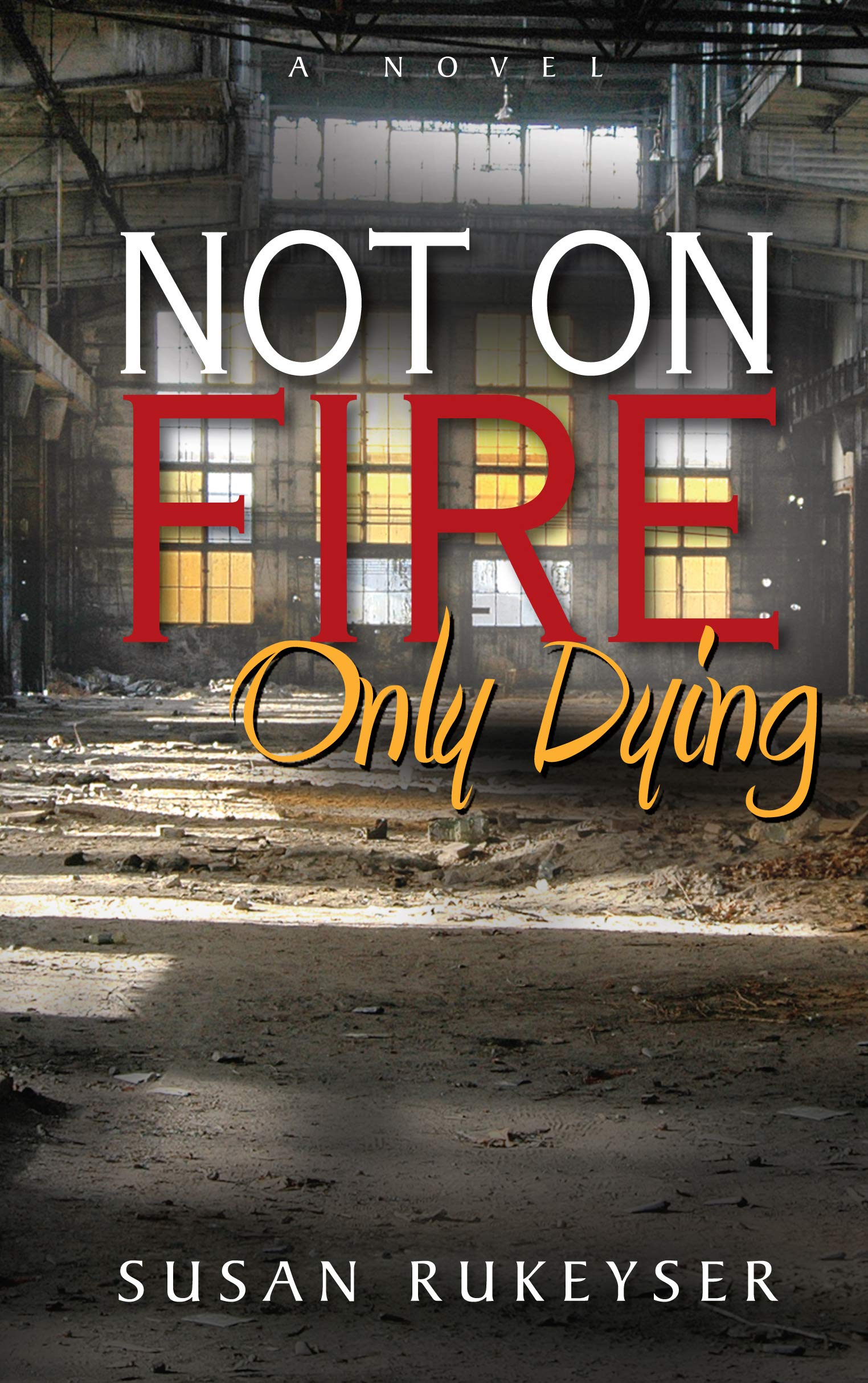
Review: Not On Fire, Only Dying by Susan Rukeyser

Not On Fire, Only Dying by Susan Rukeyser
(Twisted Road Publications, 2015, 277 pages)
Reviewed for Cholla Needles by Greg Gilbert

Boil down Westside Story, Romeo & Juliet, and A Streetcar Named Desire, Jettison the dancing gangs, the Capulets and Montagues, and Blanche DuBois, and what remains are two hearts desperate to beat as one. The question is always: Will love triumph? That’s what matters, after all. Susan Rukeyser’s premier novel, Not On Fire, Only Dying is a love story that doesn’t prettify love. It doesn’t offer flowers and clichéd orations. It doesn’t cast anyone in gauzed light or in slow dancing juke box scenes. What the book does is present us with love in its gnarly realness.

Lola says her baby is kidnapped, and the reader soon wonders if the child is real. Only Marko believes that the baby isn’t a figment of her mental instability and pharmaceutical haze. An ex-convict and drug-dealer, he is devoted to Lola and acts as her knight in an effort to right her world. Armored with his love, his honor, and his black oilskin duster, his allegiance to her fragile belief in the child is the great test of his knighthood. Though his eyes, we experience Lola as a fully formed person, at times jittery and ragged, and at times “better.” As for Marko, one may ask if he is an antihero. This is a central question in the story. Is he tilting at windmills, or is there a gallant obligation in his quest? Is true heroism founded in the heart of the warrior, regardless of the rightness of the quest? In a world of artifice, Marko may lack the qualities of a “leading man,” but just as Rukeyser’s depiction of love is cleaved to the bone, so too is Marko’s heroism. His strides are long, his love is true, his duster spreads behind him like a cape. He is all sinew and scars and heart. He is never ridiculous. Even his violence and his moments of confusion and doubt are virtuous – except for when his violence has the final word. And even then, we are inclined to forgive.  

Not On Fire, Only Dying is a compelling novel. Susan Rukeyser is a gifted writer and storyteller. Without relying on sentimentality, she draws us into the lives of her characters, some worthy of our affection and admiration, others deserving of our scorn. Her scene setting is brief and atmospheric, often poetic but never heavy-handed. Her pacing is patient, and her narration occurs from within the story’s interior. This is a streetwise book. Hardcore realities are commonplace, a one room apartment without a closet, bitter icy waters that promise infinite rest, hopes hung on a precarious balance, the world of pharmaceuticals and back-alley sleight-of-hand, and, hauntingly, in the background – the punctuating cries of a lone infant. The story of Lola and Marko is one where love is acid etched onto the hearts of two weathered souls who might become one another’s redeemer. This is a story that will sit in the reader like a personal memory.


Sunday, January 2, 2022

The Year in Reviews by Greg Gilbert


The Year in Reviews By Greg Gilbert

 Though, admittedly, while I am a reader too soon made glad, I think that most would agree with me that 2021 has been a good year for books. Among my discoveries are recurring themes involving libraries, literacy, and calls to defend biodiversity. Optimism suggests that through the arts (nod to Stephen Dedalus) we may yet fly beyond the nets of social, political, and intellectual decline. Sapere aude!

1. Light Perpetual by Francis Spufford (2021, 272 pages). Maybe my book of the year. A V2 rocket plummets into London’s Woolworths in 1944. Among the dead, five fictional children. We experience their unlived lives, each unique, roundly drawn, and carried by a mastery of prose styles tailored to each story. This is a writer’s book, yes, but also one for a student of the human condition and the realities of a post-WW2 world that is falling from its own grace.

2. The Book of Form and Emptiness by Ruth Ozeki (2021, 489 pages, magical realism). Benny Oh’s father, Kenji, dies tragically – absurdly – run over by a garbage truck. Kenji was a jazz artist. Benny Oh is young, and after his father’s death he begins to hear voices from inanimate objects. His mother, Annebelle, hordes, converts her sorrow into weight gain, and we accompany mother and son as their troubles mount. Her job involves clipping news articles that offer a parallel narrative of a growing global climate crises, the degradation of news services, and a declining concern for individual lives. The book offers an interesting group of characters: a dark spirit guide in the person of Aleph, a young artist; and an old Slovenian poet, B-man. The two most prominent settings are Benny’s home with its trash bags and mountains of hoarded items; and an old, renovated public library with its haunted cutting room. This book is an admirable stretch by an accomplished writer with the “Book” itself serving as the narrator.

3. A Time of Gifts by Patrick Leigh Fermor (published 2005, written in 1930s, 344 page) The reader will experience a sumptuous travelogue as Fermor walks across Europe and describes the world from multiple perspectives, seeing it both as it is and as it has been presented by mythology, art, and history. In Holland, he enters the Groote Kirk, the cathedral filled “with early morning light” that induces an imagined overlay “of half-forgotten Dutch pictures,” a vision of “seventeenth-century groups . . . burghers with pointed corn-colored beards . . . conferring with their wives and their children, still as chessmen, in black broadcloth and identical honeycomb ruffs under the tremendous hatchmented pillars.” The author tells us that the “beautiful city” that surrounded the cathedral, Haarlem, “was to be bombed to fragments a few years later.” He would have lingered, he says, had he known. This is a superbly rendered first-person account of Europe before the cataclysms that soon followed.

4. Cloud Cuckoo Land by Anthony Doerr (2021, 640 pages) Reminiscent of Cloud Atlas, but not nearly as demanding or self-consciously brilliant. This is the stirring fiction of an ancient play by Aristophanes that is sought by generations past and future as their own stories intertwine. While not readily comparable to Doerr’s All the Light We Cannot See (permanently on my top ten list), it does offer the same inspiring regard for the worlds inhabited by his characters.

5. Days Without End by Sebastian Barry (2016, 259 pages) The novel is presented in the voice of an Irish immigrant who flees the Great Famine only to be caught up in the Indian Wars and the American Civil War. The narration is colloquial mid-19th century USA and permitted the occasional overstep for the sake of an ongoing poetic presence. I found myself enthralled by what is both a historical adventure and a love story. The narrator’s lyrical voice is that of Thomas McNulty, a deeply conscientious person who lives a life defined by his times and by his growing awareness of who he is. The entire story is framed by his relationship with John Cole, his partner in all things, and the makeshift family they form with an adopted young Sioux girl, Winona. No less than Kazuo Ishiguro wrote, “I am resolved to read more of Sebastian Barry, a contemporary Irish poet and fiction author.” Now, having read all of his published fictions, I believe that Days Without End stands as his finest effort. Barry is a two-time Man Booker Prize finalist.

6. Crossroads by Jonathan Franzen (2021, 507 pages) Associate pastor, wife, and four children – their lives in a small Indiana town, each character thoroughly developed, each an everyman struggling with issues of religious faith, family, and personal longings and guilt. Their inner lives are authentically depicted, and their interpersonal relationships ring true. The novel is as complex and arresting as real life. The novel’s arrangement allows each character his or her own intimate third person chapters as well as settings where they interact, thus allowing a good deal of subtext to exist in the minds of the readers. While the novel turns largely on sexual and social issues, it will speak volumes to anyone who has been immersed in religious communities, a subject respectfully examined from the perspectives of each character. Crossroads is utterly devoid of derision or satire, but, rather, delves into the choices that define the courses our lives will follow.  

7. Lincoln Highway by Armor Towles (2021, 576 pages) Beginning in 1954, a young man who slugs a bully who in falling hits his head and dies, returns from a year at a work farm and sets out on an adventure with his little brother to follow the Lincoln Highway. Supporting characters serve the plot with their eccentricities and moral complexities, each a hero on an individual journey. The book is sweet and charming, particularly the protagonist’s 8-year-old brother, a uniquely wise and attentive child who loves tales of heroes and travel. My favorite is Woolly, a runaway from the work farm, a dreamy, innocent, and gentle character, an ideal companion for the 8-year-old boy. While this isn’t a literary tour-de-force, taken as a whole, I recommend it as a favorite journey of the heart this past year.

8. Klara and the Sun by Kazuo Ishiguro (2021, 307 pages, dystopian scifi) Klara, an AF (Artificial Friend), watches over a child who is ill. All AF’s are solar powered, and Klara treats the sun as a compassionate deity. Klara is a reliable narrator, devoted to the child and the sun. The story studies human relationships from a slight distance. Ishiguro’s writing is a lesson in restraint and balance.

9. Migrations by Charlotte McConaghy (2020, 259 pages. An Irish/Australian woman’s journey to follow the last migration of arctic terns. This is a near future story where climate disruption and mass extinction loom large. Central to the story is Franny and her quest to follow the last of the Arctic terns on their historic migration. Her journey takes her to sea, both figuratively and literally. While this is a worthy reading experience in its own right, it taught me to see bird migrations as never before. In terms of education, I equate this book with how The Overstory by Richard Powers helped me to better see the trees and the forest.

10. Silverview by John Le Carré (2021, 224 pages). The final book, edited by his son after Le Carré’s death. Sharp, crisp, and as insightful as any of his works, but, in this instance, mocking the service’s lack of a moral compass and its confused loyalties, a book John Le Carré wouldn’t have published during his life. The book is named for a house where a Polish émigré lives, an enigmatic character who inspires a central deconstruction of the worldly alliances that shape British spy craft.

Quick Mentions:

The Thursday Murder Club and The Man WhoDied Twice, by British comedian, Richard Osman. One can only imagine the author’s 6-foot 7-inch frame hunched over his keyboard launching this remarkable group of senior citizens into their various escapades. Comic, well plotted, extravagantly well-mannered and witty, this is a crew that I’d follow the length of Hadrian’s Wall and back.

The Dark Hours by Michael Connelly (2021, 401 pages) The 4th Renee Ballard and Bosch book. Ballard is imbued with the same drive for justice as her mentor, Bosch. Two crimes are investigated, and Bosch consigns himself to a fatherly role, as guide and protector. This is standard Connelly fare, always solid and well plotted. The conclusion is a bit formulaic and rushed, but, overall, the book doesn’t disappoint. I was fortunate to discover Connelly with the publication of his first book, and my wife and I have followed him faithfully ever since.

Magpie Murders by Anthony Horowitz (2016, 560 pages) A whodunit in the style of AgathaChristie but with a book within a book, one offering clues to the murder in the other, two well-crafted stories, two conclusions intricately woven and carefully plotted. The surrounding story is narrated by the publisher of the first book and contains literary histories and insights into plot/character devices used within the genre. The books are populated by stock characters, so I never felt as invested in the outcome as I would like, but I cannot fault the creation of a brilliant parody.

Five Decembers by James Kestrel (2021, 432 pages. A hardboiled crime novel set in WWII) The story begins in Pearl Harbor shortly before the December 7, 1941 attack. A Honolulu police detective, Joe McGrady, becomes involved in solving a murder, a journey that is backdropped by war, particularly his years in Japan hiding in the home of a pacifist ambassador. While true to the genre of hard crime fiction, the story blends romance without making it seedy, desperate, or cliched. This was an enjoyable book, at once escapist and sensitive to culture and recent history while retaining the straightforward no-nonsense style of the genre.

An America Sunrise by Joy Harjo (previously reviewed for Cholla Needles)

Augustus by John Edward Williams (previously reviewed for ChollaNeedles)