Saturday, September 14, 2019

Tobi Alfier - What a Long Strange Trip It’s Been

I hope the last couple weeks have been better for you than they’ve been for me. I know Rich and Cynthia Anderson have learned how to make a podcast and it’s available on the Cholla Needles website.

I know the majestic Cholla Needles catalog draft is now online for volunteers to proofread.

I know the past few weeks were crazy busy for Rich. Lots of driving - getting posters, etc. to the venues across the basin. Sounds simple, but the basin is 60 miles long and 20 miles wide. All the venues were at the furthest reaches. Except, of course, for Space Cowboy, which is walking distance from his house.

So I didn’t do a blog post last week, and Rich got to meet tons of folks and talk about their support for the “Big Read”.

I fell on my face, felt sorry for myself, and ran out of ideas. I did write four poems, did seven submissions, and got a few acceptances, but that’s a regular week for me. Well, except the acceptances part.
photo by Heinrich van den Berg
My Physical Therapist said I should be kinder to myself. Jeff thinks that’s very sweet of her, but totally understands my frustration, leading to lots of self-criticism, I looked like a rhinoceros with a huge purple nose, AND NONE OF IT WAS POETIC!!!! Heinrich felt it was photogenic, so something good out of everything.

This week was better. I got an email from Jen Landels of Pulp Literature in Canada. To celebrate five years of publishing, they are featuring a different author or artist on every weekday of the year in 2019, I was last Wednesday: 
 http://pulpliterature.com/2019-year-of-authors-sept-9th-sept-13th/

The two pieces they’d published in 2015 were short fiction. I didn’t even KNOW I wrote short fiction in 2015!!! This is one of them:

Sleepwalker

I.

She began sleepwalking in her forties. Once she woke up outside, when the cold on her bare feet seeped up from the bricks and shocked her awake. She rarely went out on the patio. Several times they had gone out there, heads upturned to catch a meteor shower, but the proximity to the beach made the viewing a foggy vision.

 II.

She wasn’t always angry. At first he was a smile in her day. She used to say that if she sneezed in her apartment at the beach, he would call her from his house 20 miles away to say “bless you”. That blessing was short-lived. The price was too steep to pay.

III.

She knew that addicts sometimes traded addictions; she didn’t recognize that at first, she was the addiction. She never thought about how lonely she would feel once the addiction had passed on to other pursuits.

IV.

And so it continued until the baby was born, when she came to realize the bully he was. Even in the early weeks the bullying began. And it continued.

V.

And it continued.

VI.

The sleepwalking increased once he slunk out of the house, cowardly and for good. She woke up one morning with no pants on. She woke up in the hallway of a hotel she was staying at, looked down, prayed there was a key in her hand. She thought “How can this be happening to me?”  She said “Thank you” to the night clerk who let her back in.

VII.

She has been alone for a year and 10 months. She has taken the trash barrels out to the street 97 times. She has changed 7 lightbulbs. His bike is still in her garage. His books are still on the shelves. His empty dresser is in their bedroom.

VIII.

All she wants is someone to push her up against a wall and kiss her. And ask her how her day was. And light the barbecue. If someone held her close it would be redemption. And she would sleep.

(previously published in Pulp Literature)

My bio back then made me realize that the standard 50-word bio required today doesn’t give you much room to write anything interesting. And my picture…I used to look so much nicer. All I can say now is at least my nose isn’t purple anymore.

So…I can tell you all you need to know about getting a copy of your birth certificate, how pretty bruises are, even as they change colors like the northern lights, and what a nice article Benjamin Percy wrote in the new Poets & Writers Magazine.

I can tell you about the Korean Mother’s Day card my son sent me in tenth grade and that he no longer remembers Korean. I can let you know that Haagen Dazs has a flavor entitled Bourbon Vanilla Bean Truffle and it’s really good.

I can tell you that the ninth would have been my 28-year anniversary where I worked, if I had not gone out on disability, and of course the eleventh makes everything that happened to me as small as the baby ants hanging around on my desk.

But there is goodness in this world, and lots to write about. Bless you all, try not to sleepwalk, and let’s have a great week!!!


- - - -
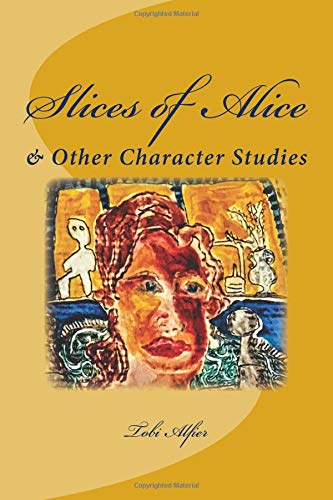

Tobi Alfier's most recent collection of poetry is Slices Of Alice. She is also co-editor with Jeff Alfier of the San Pedro River Review. Don't miss Tobi's columns on the craft of poetry: insert your email address in the "Follow By Email" box to the right of this article and you'll be notified every time a new article appears.


Wednesday, September 11, 2019

Interview: Poet Michael H. Brownstein

Interview: Poet Michael H. Brownstein

Who are you & what do you think you’re doing?

Interviewed by Moristotle

Poet Michael H. Brownstein came to my attention by way of an email a little over three months ago: “Bob Boldt told me about your site…How can I submit poetry?” I told him, he submitted, I invited him to join the staff, he accepted, and less than two weeks later his first submission appeared here, in his column, “All Over the Place,” followed by another poem every Sunday since.

    And less than three weeks ago, in reading his book  A Slipknot into Somewhere Else, I discovered that his work has appeared in over 50 poetry journals. I don’t think I even knew there were that many poetry journals. I’ve only begun to visit their websites to learn a little about them.
    While we can learn a good deal about this poet by reading his weekly submissions, much of what we learn is only suggested, hinted at, alluded to by his poetry, which is more elliptical and “evocative” (as his fellow columnist Roger Owens says) than literal and declarative.
    In the hope of learning something literal and declarative about Michael H. Brownstein, I invited him to be interviewed. He accepted, and here we are. My questions are in italics.

Michael, the high number of poetry journals and forums your poems have appeared in leads one to expect you might be written up in Wikipedia, but when I googled on “michael h brownstein wikipedia,” I found no entry. If there were an entry, what essentials might we expect to be included in its opening paragraph?
    Probably what everyone has – birth dates, family info, parents, city and state, and then a sentence or two on why this person is in Wikipedia.

What essentials in the “Childhood” section?
    Born in Chicago, moved to Skokie – a hop and a skip from Chicago – when I was four, went to the Evanston School District, did some volunteer work with Hull House, started writing, sent stuff off – and nothing was accepted.

The “Education” section?
    Graduated from Evanston High School, went to Northern Illinois University in DeKalb (I thought then – and still do – that it was my best fit – they had a teaching program where you student-taught in the second semester of your freshmen year), earned a Masters in Curriculum and Development from National Louis University – that’s that.

“Early Adulthood”?
    Started teaching in Chicago’s inner city in one of the most dangerous neighborhoods when I was nineteen, transferred a year later to the housing projects on the far Southside, taught GED a few miles away, and mathematics for Kennedy King College in the project buildings nearer to downtown. Because Chicago had an annual strike just about every year, when I began teaching at Farren next to the Robert Taylor Public Housing Projects (at the time, the largest public housing in the world), I established a not-for-profit, The RAMP (Reading and Math Program), so my students would not miss any school. After the strike ended, I decided to keep the program going as an academic after-school program, started writing grants, hired some local teenagers to help out, and discovered I had an aptitude for grant writing.
    Here’s an excerpt from a published essay from my Teacher Book:
One time I entered my class to discover a classroom of weapons. Almost every child had something on their desk – a thick stick, a piece of metal, rocks, one kitchen knife. “What’s going on?” I asked and they reminded me today was the day a student was transferring into our room from another class, his ten-day suspension over. My class was scared. They knew his reputation. He was dangerous; he hurt people. They reminded me how two weeks earlier he had grabbed some boys and held them hostage in the bathroom. This was before zero tolerance, before every school spent money on security, a time when a touch on a child’s shoulder meant good work and it was okay to hug. Somehow I was the teacher who managed to reach out to the suspended student, calm his hostages, calm him, and settle the matter with no one getting hurt. After a few weeks, I knew he really wasn’t a bully. He was just a victim in need of nurturing. When we in the school changed the way we dealt with him, he began the slow process of healing. At school’s end, he made a few good friends.
    There were others like him. Too many to count. There was the girl who was raped by an uncle and withdrew so far into herself, she still has not fully healed. There was the boy who couldn’t stand his mother getting beaten all of the time and took his anger out on the younger students. There was the teenager who got a summer job so he could go to college only to have his stepfather steal his earnings to buy whisky. I became a part of these children. I made sure the girl was safe. It took newspaper articles and police, but it was done. I made sure the boy’s mother was no longer beaten. I went to his home after school one Thursday and she answered the door with a bleeding lip, a skewed nose, one eye swollen shut. I had come to ask for assistance with her son, but that matter fell to the wayside. “How do you pick a man?” she asked. How did I know the answer? But I knew where she could get help. I knew where she could get counseling. I knew where she could learn how to rebuild her family and her own self-esteem. I was able to offer her that, and I did. By the end of the year, he no longer bullied little children. He became a classroom superstar. And I went into the housing project and into the apartment of the stepfather who had stolen the money for liquor. I asked everyone to leave the room so he and I could talk privately. What was I thinking? He was bigger and he was stronger, but I was right. I told him we would solve the problem now – however he wanted. It did not make a difference to me. He gave the money back and I kept it for the remainder of the summer for safekeeping.
When it comes to the “Work” section of this fantasy Wikipedia entry for Michael H. Brownstein, I’d like to get specific. Let’s start with this. In what year was your first poem published?
    I wrote from when I was in junior high, but nothing really jelled. When I turned thirty-five, so many years ago, I fractured my hip playing ice hockey and could not work for a few weeks. It gets really boring laying around. I sent a few opinion pieces off to the Chicago Sun-Times and they not only took them, they sent me a nice check. Then I began submitting work to the Chicago Reader. They paid the rent. What the hell, I thought, let’s send out some poetry, maybe some fiction, a piece of creative nonfiction. To my amazement – and I’m still amazed when my work is accepted and published – everything I sent out found a home. Back then there was this real nice magazine called FactSheet Five. It reviewed hundreds of small press journals. No one knew what the Internet was back then. I made sure I had a current copy at all times and I kept sending work out and getting good news, or bad news, or news to revise. I wish there was a FactSheet Five today. The closest I can find is the links on Poetry Super Highway.
    I didn’t answer your question yet, did I? My first poem was published in 1985. Can’t remember who or where, but that’s the date. First chapbook came out a year or two later – The Shooting Gallery from Samisdat Press. I entered my first poetry contest a year or two later with Ommation Press and won with a chapbook entitled Poems from the Body Bag. After that I became passionate about writing. Since that time I have over a thousand publications in a few hundred – or more – journals online and in print.

I mentioned Bob Boldt in the introduction. Like you, he lives in Jefferson City, Missouri. How did you meet Bob? Was it he who suggested you might find dozens of small journals in which to publish your poems?
    When I retired from teaching and grant writing, my family moved to Jefferson City, Missouri. We had an old home there and we decided to move into it. When I discovered the library had a writing workshop that met monthly, I found out Bob was the contact person. Went to a meeting, met Bob – another Chicagoan – and discovered one of the librarians at that library actually had placed a few of my chapbooks in the library stacks. Bob and I discovered them together. We’ve been friends ever since.

The subtitle of your “Slipknot” collection labels it a “journey to the borderlands of dementia.” Have you, yourself and personally, ventured into dementia? How far?
    Strangely enough, I never met or encountered anyone with Alzheimer’s or dementia. I’m getting older. Sometimes a word stretches away from my tongue and I can’t get ahold of it until minutes, hours, sometimes day or even months (like the word “advocate” in my book). Sometimes people speak about senior moments or a sudden pause into daydream land. I think I sometimes have these moments, but I have learned that if I have a problem or a concern, if I write about it – make a poem about it – oftentimes the negative issues go away. After putting my book together, I actually had less lapses in memory and I began to feel stronger. Now I’m writing grants again, tutoring students of all ages, learning new skills (website development is one example, tuck pointing another) and I’m writing up a storm. I’m even weightlifting now and I can walk a mile in about twelve minutes. I’m not sure I answered the question, but I will tell you this: when I wrote the book, I tried to imagine what it must be like to be slipping into Alzheimer or dementia. I’m not a fan of Ronald Reagan, but I do admire his spirit when he found himself moving rapidly in that direction. He said something like this: Don’t worry about me. I’m just entering another realm in my life, another adventure.

The book’s “about the author” page says that you are the head administrator of Project Agent Orange, whose website indicates that you are the primary contact for a grant to support the project. When did the project start? Were you its founder, or one of its founders?
    In 2012, my son earned a scholarship to the Ha Noi University of Agriculture – the first American, we were told, to ever be admitted. All of the women in my life – my daughter, my wife, even my mother – told me I had to go with him. You can’t win that argument so we went off to Vietnam together. They could not find him a place to stay for a month. We stayed in a guest house on campus waiting, he going to a botany lab every day and me – well, they asked if I would teach English. Best job I ever had. Needless to say, we ate lunch with his lab mates and a week into the program, one of them asked me why we had the American War. American War? Why was she interested in learning about the Revolutionary War? No, she corrected me, the war that brought you to my country. In Vietnam, it’s not the Vietnam War, it’s the American War. One thing led to another and Agent Orange came up. Strange as it may seem, I really thought our country had cleaned that mess up. No, I came to find out up close and personal, that we did not, that its harm was still there and still expanding. You can link to the websites here: Project Agent Orange and First Poems from Vietnam.
    When they finally found a dormitory room for my son, I flew back home, began Project Agent Orange, wrote a grant to the Ted Oppenheimer Foundation and received a substantial check to fund the project in Vietnam. The next thing you know the Ha Noi University of Agriculture is assigning coursework on what needs to be done. One of our greatest accomplishments was our discovery that even small amounts of arsenic in the drinking supply worsened the symptoms of Agent Orange. We were able to fund a number of clean water purification projects still in use today. Another accomplishment was the funding of sustainable farms for Agent Orange families – we funded a rabbit farm, a ranch for oxen and other large mammals, and a fruit tree farm, among others. We still take donations, but since there is no one on the ground there any longer to assist, most of the donations now help our veterans and their families who continue to suffer from Agent Orange.

What was your stance on that war at the time, when it was going on?
    I’m a student from the sixties. I was one of the protesters – very active and very loud. Even today when I leave the country or want to get back in, I’m totally searched, my bags ransacked and many times I find myself in a small room waiting for the interrogation to be over. Once when my family was visiting the third world part of the Caribbean Islands, they would not let me on the plane with my family. Fortunately, someone told them it would be okay – let the Americans take care of the American. That’s how I made the flight thirty seconds before the door was closed. I do want to say though, that I never spat on a veteran or cursed one and I don’t know anyone who did. With my project up and running, I now have several friends from that war – and they know I was one of the protesters. The war came to an end after my second or third year of college.

For me, the most gut-wrenching poem in the “Slipknot” collection is probably “44 Bullets,” which you wrote “For Victor Jara, a Chilean folk singer…[who was] shot 44 times ‘to make sure he could not inspire…from the grave’.” How did you learn of Víctor Jara? Have you visited Chile? Were you involved in protests against American intervention in Chile, where the forces who overthrew Allende in 1973 murdered Víctor Jara?
    I was a staff writer for an alternative and very vocal anti-Chicago Teacher’s Union and Chicago Public School policy for the newspaper Substance. Back then it was print only. I was also the union rep for my school. Anyway, one of the other staff writers wrote about Víctor, I read her piece, was shocked and angered, and “44 Bullets” came to be. I have to say that though I was never in Chile, by the time this happened I was active in protesting against how our country dealt with governments from other countries our government did not agree with. I guess I still do that today. An example, if you want to know more, is my online e-book, Firestorm: A Rendering of Torah, published by the Camel Saloon Press at Firestorm. It’s my take on what is going on, had been going on, in Israel/Palestine.

When I googled on the common noun “slipknot,” I discovered the heavy metal band that goes by that name, founded in 1995 in Des Moines, Iowa. Have you been to a Slipknot Band concert?
    Never heard of them, but I will You Tube them. I selected the word “slipknot” because that’s a knot that unties easily. I hope people who read my book will be able to untie their mental states and grow stronger.

I have encountered several unfamiliar words in reading your poems, thankfully not long, abstract, Latinate words, but words for concrete, everyday objects, like “leks” and “bowerbird”...How did these words find their way into your lexicon, into your work? Do you consult dictionaries a lot? Are the sources just things you happen to read? (These words were introduced to me by your work.)
    The Wall Street Journal has an excellent supplement every weekend – I think it’s called the Weekend Review. It’s not a financial review, but a collage, if I may, of interesting essays, opinion pieces, and a lot of books reviews. Not simple book reviews but deep and complex. I learn too much. I have a backlog of three issues presently. I find I can never read the entire section in a day or two. Sometimes it takes me a week or more to finish.

Allison Kat wrote in a review of the “Slipknot” collection on Amazon that you told her you “just want to get your message out there.” What message is that? Is there some underlying message of all of your work, or were you referring to particular messages of particular poems?
    Both. You caught onto the angst in “44 Bullets.” Did you feel the downward pull when you read the introduction of the book? The poem is written and divided in this way to assist you as you enter the borderlands of dementia. My editor worked that one out and I agreed with his formatting. I think Rich Soos is brilliant. That’s why the into and conclusion are the way they are.
    I want readers to not fall past the border. Stay strong. Read and react.
    In Allison’s case, I wanted to do more than be a book on her bookstore’s shelf. I wanted to explain in a reading at her store why I wrote the book and how writing, journaling, creativity keeps us sharp and mentally alive. I’ve done a few of these presentations here and there.

Your biography page on Amazon concludes with the paragraph, “You go camping, and a rattlesnake crawls into your sleeping bag. Prayer and poetry – they really do go together.” What is prayer, for you?
    I feel I am a spiritual person, God surrounds me, and I enter into her/his home with prayer. Really, though, my best prayers are my writings, be they poetry, fiction, or creative nonfiction.

Do you think of yourself as having a method of working? How close to “finished” is a typical first draft? (Is there such a thing as “a typical first draft”?)
    I’m never done after a first draft. My first draft contains lines that I feel flow together, and then I reread them, and often they don’t. I keep lines, stanzas, images and words I like in my journals. A poem is ready to send out after I have done many revisions – and then I see something else that needs to be changed. “44 Bullets,” for example, was revised over a dozen times. I guess I’m saying nothing I write is ever really completed. Sometimes I have to move on.

Have you worked and worked and worked on any poems and ultimately given up on them, thrown them away?
    I don’t know that I throw them away. I think something in everything I write may find its heart, if you will, and then I will use a line or a phrase. Some of my poems are plain awful. I keep them someplace safe anyway.

Do lines (or whole poems) just “come to you”? Another Moristotle & Co. author (of thriller novels, Ed Rogers) says he dreams his stories. Do you ever dream a poem?
    Do you know how an idea comes to you out of nowhere and you cannot let it go? I write the poem down and then I’m able to leave it be. Dream poems are that way too. Very few dream poems, for me anyway, ever really produce anything useful, but I keep them safe anyways.

Eric Meub, a demonstrated master of traditional poetic verse (metrical, rhymed stanzas) commented on your poem “Long Hair / Strong Hair”: “This is absolutely brilliant. The tangles of images and sounds and voices talking past each other is so good I’m speechless.” Would you talk about that poem, please, with reference to Eric’s observations.
    This is an example of a poem derived from a number of poems I did not like in their entirety but did line for line. The conversation at the video store was a reenactment of what seemed to me two unrelated people having a conversation with each other but were really talking to them self. When I connected the lines together to finish this poem, I found a framework of imagery and I liked the way it flowed and the way it presented itself. I like to use ears for seeing, noses for hearing, mouths for sight, hair for echoing, hands to take a piece of beauty and make it whole. This poem took me to a lot of places – maybe even all over the place – and I was happy.
    My hair is quite long now; it was long when I was younger (but now it’s ponytail long) – and my beard is stretching downwards; much longer than at any other time in my life. The woman in the poem – actually she’s my wife – will not let me cut my hair.

Michael, you spend a lot of time writing. What else are you doing these days?
    I’m rehabbing a few old houses, tutoring college students and other youth in need, and co-running a not-for-profit called the Ash Street Block Club Association – a program that is all over the place. For example, we helped during the tornado and recent floods, and we are now working to help prevent suicides, assist young adult authors, and help reintroduce newly released inmates back into the community.
    In the past five years, I worked as the English Specialist for Lincoln University and did logistic work to bring a Southeastern Asian corporation to the States (still working on that one). And I have been collaboratively developing NatureClaim, a researched-based portal into medicinal plants, herbs, spices, and other health-related items.

You keep busy doing good. 
    Thanks for the great questions. Tell you what: if your readers have more questions and/or comments, please ask them to post them in the comment section and I’ll answer them as soon as I can.

Michael, I thought I was just being playful and clever leading off with those fantasy Wikipedia questions, but it’s clear that there ought to be a Wikipedia entry for you! But whoever takes the assignment already has a lot of information for it right here. There are quite a few more journals to consult (and cite), though, than the over-50 I was already aware of. And a long list to compile for your bibliography. Volunteers may contact me.

Copyright © 2019 by Michael H. Brownstein & Moristotle

Copied with permission from moristotle.blogspot.com


Monday, September 9, 2019

Cynthia Anderson Talking About Route!

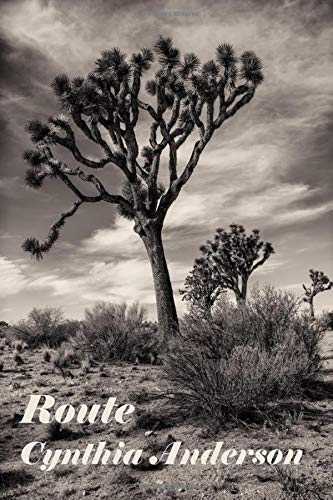
Podcast #1 is now up from Cholla Needles! Cynthia Anderson discusses her new book, Route, from Cholla Needles Arts and Literary Library. She also talks about her collaboration with artist Susan Abbott, and some of the writers who have inspired her life and work.


Click here to listen =:-)
or. . .look below - you can listen while on this page!


See on Amazon

Cynthia Anderson lives in the Mojave Desert near Joshua Tree National Park. Her poems have appeared in journals such as Spillway, Crab Orchard Review, Apercus Quarterly, Askew, San Pedro River Review, Mojave River Review, Cholla Needles, The Coil, and Split Rock Review. She is the author of nine poetry collections and co-editor of the anthology A Bird Black As the Sun: California Poets on Crows & Ravens.
Reviews:
The work Cynthia Anderson has done in Route is brilliant. Her imagistic poems capture the Mojave—what it is, what it was, and what she fears it will be. She sees herself as part of this great desert and its myths. As the desert suffers, she suffers, and when it flourishes, so does she. This collection will change the way you see the Mojave. —John Brantingham, Poet Laureate of Sequoia and Kings Canyon National Park
Desert is more than an environment. Reading Cynthia Anderson’s poems, it’s easy to understand how it becomes a state of mind as she watches rattlesnakes and hawks and all that moves between them with the satisfaction of seeing life in its raw urgency. —David Chorlton, Author of Reading T.S. Eliot to a Bird
“Even the dead/belong to someone.” So writes Cynthia Anderson in this deeply felt observation of the Mojave Desert—populated with animals, birds, insects, and plants at turns benign and deadly. Her descriptions fit neatly within her spare, taut lines. This is a wonderful book. —Erica Goss, Los Gatos Poet Laureate 2013-2016, author of Night Court
Route by Cynthia Anderson is a magical book, celebrating the flora and fauna in her beloved Mojave. She seems to mirror Like Water for Chocolate or Carlos Castaneda, with a little Edgar Allan Poe mixed in…always with respect for the desert and its multi-faceted beauty. —Tobi Alfier, Co-Publisher San Pedro River Review and Blue Horse Press


Sunday, September 8, 2019

Open Reading September 13, 5-7 at Art FX in Yucca Valley


Your host for this open reading is Ginny Short. Come early and browse the store. ArtFX is exactly what it sounds like - an art store with many local artists represented. The open reading will be behind the store. Bring something of your own to read, or a passage that inspires you, or wax eloquent on your personal view of survival. You're also welcome to simply come and listen to your neighbors. The "plan" is for the entire community to come in, share, and simply have a good time! All ages invited, and every event is free! See you there =:-)

Wednesday, September 4, 2019

September 2019 Cholla Needles Open Reading Events Calendar!


September 13, 2019 5-7 PM 
ArtFX ++  Moderated by Ginny Short
55836 Twentynine Palms Highway, Yucca Valley

September 15, 2019 5-7 PM 
Space Cowboy Books ++ Moderated by Susan Rukeyser
61871 Twentynine Palms Highway, Joshua Tree 

September 20, 2019 5-7 PM
Mojave Moon Café ++ Moderated by Ellen Baird
73511 Twentynine Palms Highway, 29 Palms

September 26, 2019 6-8 PM
Landers Brew ++ Moderated by John Sierpinski
1388 Golden Slipper Ln, Landers

September 28, 2019 12-2 PM
The Art Colony ++ Moderated by Peter Jastermsky
11165 Vale Dr, Morongo Valley

September 29, 2019 1-3 PM
The Palms Restaurant ++ Moderated by George Howell
83131 Amboy Rd, Wonder Valley

!!!Party!!!

Different moderators for each event!!! Be sure to thank them for their service to our literary community! Come prepared to read your latest creations =:-) 

Note the different venues! It would be nice to show your appreciation the venue for volunteering their space by checking out the art for sale (Art FX, The Art Colony), the books for sale (Space Cowboy), the food for sale (The Palms & Mojave Moon), and the beer for sale (Landers Brew). Good Times!!!  

Sunday, September 1, 2019

New Book! Route by Cynthia Anderson


Route features the spectacular photos of 
Bill Dahl (Cover) and Diana Shay Diehl
and new poems by Cynthia Anderson

Reviews:
The work Cynthia Anderson has done in Route is brilliant. Her imagistic poems capture the Mojave—what it is, what it was, and what she fears it will be. She sees herself as part of this great desert and its myths. As the desert suffers, she suffers, and when it flourishes, so does she. This collection will change the way you see the Mojave. —John Brantingham, Poet Laureate of Sequoia and Kings Canyon National Park
Desert is more than an environment. Reading Cynthia Anderson’s poems, it’s easy to understand how it becomes a state of mind as she watches rattlesnakes and hawks and all that moves between them with the satisfaction of seeing life in its raw urgency. —David Chorlton, Author of Reading T.S. Eliot to a Bird
“Even the dead/belong to someone.” So writes Cynthia Anderson in this deeply felt observation of the Mojave Desert—populated with animals, birds, insects, and plants at turns benign and deadly. Her descriptions fit neatly within her spare, taut lines. This is a wonderful book. —Erica Goss, Los Gatos Poet Laureate 2013-2016, author of Night Court
Route by Cynthia Anderson is a magical book, celebrating the flora and fauna in her beloved Mojave. She seems to mirror Like Water for Chocolate or Carlos Castaneda, with a little Edgar Allan Poe mixed in…always with respect for the desert and its multi-faceted beauty. —Tobi Alfier, Co-Publisher San Pedro River Review and Blue Horse Press

Bio:

Cynthia Anderson lives in the Mojave Desert near Joshua Tree National Park. Her poems have appeared in journals such as Spillway, Crab Orchard Review, Apercus Quarterly, Askew, San Pedro River Review, Mojave River Review, Cholla Needles, The Coil, and Split Rock Review. She is the author of nine poetry collections and co-editor of the anthology A Bird Black As the Sun: California Poets on Crows & Ravens. Her recent book, Now Voyager, features the art of Joshua Tree artist Susan Abbott.


We encourage our neighbors to buy Cholla Needles books at Rainbow Stew, Space Cowboy, and Raven's Books. Support our local distributors!