Tuesday, September 1, 2020

Review - Patti Smith with Soundwalk Collective (2016-2020)

The final part of the Perfect Vision trilogy is now available and this feels like a good time to evaluate all these poetic adventures as a whole. 
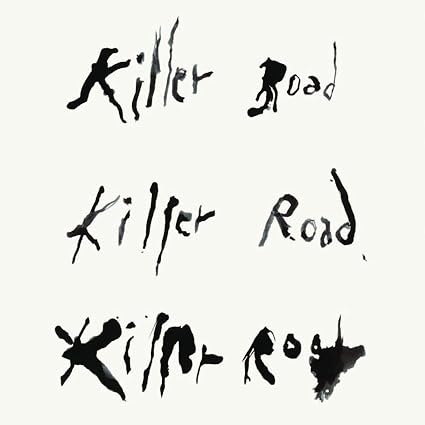
Killer Road (2016) is pre-trilogy, and is dedicated to the German poet Christa Päffgen. She is known in our culture as Nico. The introductory piece is a spoken word reminder of the tragic death of Christa on the road "waiting for you like a finger pointing in the night." The other eight pieces on the album are the poems of Christa performed as spoken word by Patti Smith with a unique musical background from Soundwalk Collective. For those familiar with Nico's work these pieces are unexpected and create the desire to pull out the Nico versions, which are more adventurous. Over time as these new versions become friends, it is easier to accept them as new art performances.  "There is no witness to my anger / When it stabs until it dies / I am looking for the strangler / To help me, help me with my crime".  


The next three albums were announced as a triptych entitled The Perfect Vision, with spoken word pieces assembled and inspired from the work of three French poets Antonin Artaud, Arthur Rimbaud, and René Daumal. The Soundwalk Collective traveled to three regions of the world in an attempt to discover an authentic background ambiance for the words of each writer.


The Peyote Dance (2019) Recorded in the northwestern region of Mexico, the musicians were looking for inspiration in the same manner Antonin Artaud did in 1936. "I am the man who has best charted his inmost self." Humility aside, Artaud did profess an aversion for the external life being led in Europe, Asia, and the United States, and hoped to find a life of simplicity among the indigenous peoples of Mexico. He recognized the many tribes, and spent time with Tarahumara. His written observations inspired the beat writers, and Ferlinghetti's City Lights keeps translations of Artaud's work in print. 

Patti's emotional reading of Indian Culture gives the distinct impression that Artaud was not enthralled with every aspect of Mexico. This track is especially effective and provides a strong introduction to the poetry that follows. A few tracks later in The New Revelations Of Being the tone changes dramatically to an acceptance of the cuture "here where the mother eats her sons / power eats power / short of war" 


Patti writes her own words to deepen the listener's understanding of the reality of Artaud in the poem Ivry:
Slowly, he goes
From the room like any other
Toward the mountain
Toward the mountain
In Mexico
Where the soul quakes
Where the heart aches
To Mexico
Our sleeping friend
So scorned, adorned
One step, then another
From the solitary cell


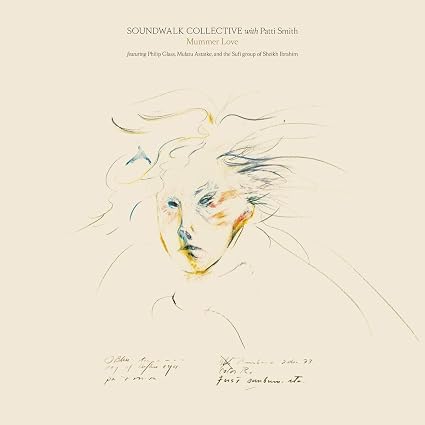
Mummer Love (2020) Like Artaud, Arthur Rimbaud left France for a time to escape from "western stagnation". Rimbaud chose Africa and ended up in Harar, Ethiopia. The musicians followed his path and spent time with Sufi masters and practioners, recording their music and chants, and ambient sounds. Artaud is given space to speak to us through Patti's voice making this a true and effective collaborative effort. Soundwalk Collective has also made recordings of Rimbaud "Illuminations" which can be accessed on their podcasts page.


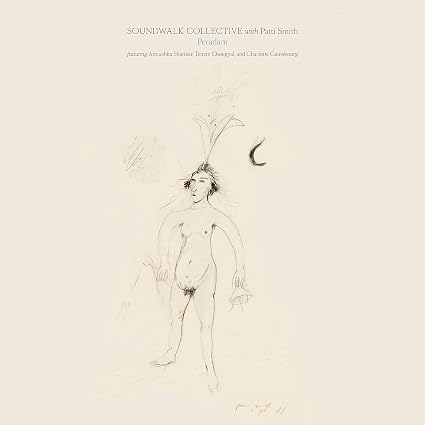
Peradim (2020) This recording is based on a fictional "Mount Analogue" by René Daumal. The musicians chose to visit the Himalayas as the source of inspiration for this album. The peradim is also fictional, a precious object harder than diamond that "is revealed only when someone knows they are seeking it." Patti and the Soundwalk team bring these words to life in equally fictional spirituality "we will climb / and not move / a single muscle".  There is a joyous peace throughout this enjoyable album. "The gateway to the invisible / must be visible"

I admit partiality to the final cut and tend to repeat it every time the album plays because a magical feeling of truth comes alive in me as Patti reminds all life is dependent on each other living thing. This lesson is learned by killing an old rock rat, and the energy reminds me of the poetry of Donovan Leitch: "first there is a mountain / then there is no mountain / then there is." Why does the mind make these leaps? We'll never know. Patti Smith and Sound Collective are able to capture that inner kingdom quality we all need from time to time to maintain a sense of mental balance. "Hi-ho / to the mountains go / where all / the flowers grow." 

If I ruled the world, my personal choice for a future Patti and the Collective would be a wild and raucous take on Daumal's Night of Serious Drinking

The Perfect Vision triptych works beautifully as a night of aural exploration into spoken word poetry & spirituality. It was good to experience them one at a time as they were released, and now that they are available to experience as a unit I do believe that when I revisit the set, I'll listen to them in order, in the same manner as I listen to Killer Road in the same session with Nico's final albums. 


Review: Garrison Keillor - The Lake Wobegon Virus

The Lake Wobegon Virus: A Novel by Garrison Keillor

It sure is great when a writer can help readers like me get through a difficult subject with humor, and Garrison manages to do this with four to five out-loud laughs per page. Since I am reviewing this for a literary magazine, I will also mention that the poetry Garrison included in this slim volume about our second favorite small town in America, Lake Wobegon, is great fun. (Of course, everyone's most favorite small town is the one they happen to be holed up in during this crazy year called 2020).


Born to Raise Hell

I got sick of this old town,
No excitement to be found
Now everybody’s telling stories
How I trashed the lavatories
When I walked by the fire barn
I saw the box with the steel arm
I broke the glass, I rang the bell
I raised hell.

You can see my writing on the wall
In every lavatory stall.
Set off sirens during Mass,
Threw a rock through the stained glass.
I done my job very well
I was born to raise hell.

Other poets are mentioned and even quoted from. What a blast it was to attend a funeral and hear William Cullen Bryant brilliantly excerpted. 

You can't have a novel about a virus in 2020 without mentioning the President by name, and yes, even Donald J. Trump gets a mention in this book because - well, it's best if you read it yourself. His presence is another snorting-milk-(or beer)-through-your-nose moment that would take longer to tell you why it's funny than to simply let you read it yourself in context.  It all has to do with Johnny Rogers, a singing poet, who wrote immortal lines like:

Birches and a big elm tree,
On a porch just you and me.
Tulips all thick and sweet,
Lonely neighbors on the street.
The whistle of a southbound train,
Summer night, feels like rain.

The folks and I don’t belong.
Nobody knows us in this town.
Nobody needs us, that is clear.
So where do we go from here?
Crickets murmur in the grass
The trains go through and the hours pass.

and

You look at me like I was giving off an odor,
You got your daughter in the car and started up the motor
And you closed the windows and locked up the doors
And I thought to myself: Up yours.

and

Proud of Who I Am


My beer’s gone flat and I lost my hat
and I’m getting fat, she tells me.
It’s all that steak ’n’ burgers with bacon
that’s makin’ this great big belly.

An’ I walk with a gimp and I feel like a simp
and my willie’s gone limp and I’m stuck in
A lower gear and I’m out of beer
but I’m here so I’ll keep on truckin’.

True Americana poetry! 

There are literally about a dozen events happening on each page, and somehow all working together to visit every aspect of life on our planet in these approx 230 pages. For the readers here, who are also mostly writers, the best advice about the writing life is openly hidden in these pages, with our main character reminiscing about meeting F. Scott Fitzgerald. A wonderful & thoughtful scene - and I know I'll be looking at my own writing much differently every day thanks to this fortuitous meeting.

So there you have it - philosophy, humor, birth, death, sex, alcohol, dreams, and another Great American Novel from Garrison, who managed to sneak a micropoem into the mix:

I write these short lines
With fear in my heart that they
Will make a haiku

=:-)


Click here to order your copy on-line ($24.29)

Monday, August 31, 2020

Review of Antkind by Charlie Kaufman

Reviewed by Greg Gilbert


              Charlie Kaufman’s Antkind has been described as Portnoy’s Complaint meets Finnegan’s Wake. In terms of visual art, I’d suggest Hieronymus Bosch meets Gary Larson. This is a work that can only be described through inadequate similes because it’s like nothing else I’ve read. The story describes a crisis of existence, perhaps even an existential crises, in the life of a film critic, a pretentious and painfully self-conscious pseudo intellectual, B. Rosenberg, a Jewish looking non-Jew who repeatedly experiences pratfalls into open “person” holes. While the narrative ranges from the profound and poetic to the spiritual and profane, the writing style is Groucho Marxist in the extreme. Nothing escapes lampooning, including a variety of damning observations about the artist Charlie Kaufman.

                In “real” life, Kaufman is a filmmaker credited with Being John Malkovich, Eternal Sunshine of the Spotless Mind, Synecdoche, and Anomalisa, a stop-motion film. His fascination with stop-motion and human beings as meat-puppets is central to Antkind. This is his breakout novel. At 714 pages, it really does feel like the author is breaking out of something. I felt as though I’d been on a long amusement ride that included a haunted house, a time machine, a tunnel of love, a variety of “Who’s on first” variations, and a meat packing house with Terminators and clown medics.

                Anita Felicelli describes Kaufman’s work as “feverish genius.” I’m not so certain.  Antkind tells its story of human absurdity by being grossly absurd, more fever than genius. There is a sense of liberation and release in the prose style, certainly the product of a smart and, dare I say it, an overtly self-indulgent style that would leave Tom Robbins scratching his head, but no more genius than B. Rosenberg. After reading Antkind and recovering from near exhaustion, I had to admit to a touch of awe at the author’s gimmicky freedom. I have a hunch that Kaufman’s absurd meanderings will linger in my thoughts for some time. This is not so much a recommendation as a review. Personally, if he writes another book, I’ll likely skim it.   

- - -

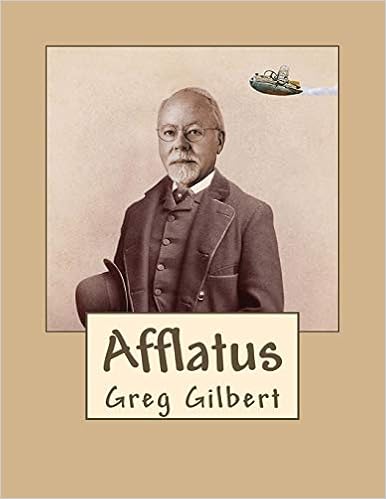
Greg Gilbert is the author of Afflatus.

More info

Review of Utopia Avenue by David Mitchell

Review By Greg Gilbert

                 Utopia Avenue is a 574 page fiction that centers on a British band in 1967 London. The psychedelic times, the political and spiritual movements, the people, the stars, and, most important, the music and the life of a band are delivered as only a writer of David Mitchell’s genius can. The band members are interesting and well drawn as the reader becomes intimate with their artistries, personal conflicts, and ambitions. Central to the story is how they shape their calls to artistry to the world in which they live, what Brian Eno refers to as ‘The Scenius,’ ‘The genius of the scene.’ “Art’s made by artists, but artists are enabled by a scene—non-artistic factors. Buyers, sellers, materials, patrons, technology, places to mingle and swap ideas. You see the fruits of scenius in Medici Florence. The Dutch Golden Age. New York in the twenties. Hollywood. Right now, the scenius of London, and Soho, is pretty perfect. We’ve the venues, studios with multitrack recorders, the radio stations, the music papers and magazines…even cafés where session players hang out.” And today we see it in the writing of David Mitchell.

                 The music of the times is a character in the novel as well, including discussions between band members as well as vignettes within the narration. The narration at one point alludes to “Sgt. Pepper’s Lonely Hearts Club Band”: “The last track, `A Day in the Life,’ was a miniature of the whole album, like the way that the Book of Psalms is a miniature of the whole Bible. Lennon’s ‘found’ lyrics contrasted with McCartney’s kitchen-sink lines. Together they glowed. The song’s closer was an orchestral daymare finale spiraling upward to a final chord, slammed on dozens of pianos. The engineer raised the recording levels as the note fell away. Jasper thought of the end of a dream when the real world seeps in. It ended with backward laughing gibberish.  The stylus lifted off and the arm clunked home.”

                At times we witness individual creative and discovery processes at work: “The right hand played overlapping minims: C to C an octave below; F to F, the same; B flat to B flat; E to E. The left hand played jazz like sixths; blue jazz, not red jazz. It ended. Elf wanted to hear it again. The pianist obliged. This time Elf paid attention to the right-hand thirds: E and G; D and F; C and E; then a yo-yo back up to A and G, where the hand opened wider; a thumb on F and pinkie on B flat…” Questions of composition are instructive. G…D…E minor? Dean tries picking instead of strumming. Better. Better. Try an F minor instead of the G. No, F. One spoon of Dylan makes a gallon of meanings. Why don’t I try to write lyrics like this?”

                The band’s music is a fusion of audience, the times, and the traditions that have brought them to their shared moment. “Griff started with a tom-tom and came in with a minute’s solo in the style of Cozy Cole. Then he grabbed his sticks and played a solo, heavy on backbeats and rim shots, with a snare interlude. Elf watched his hands with a faraway smile on her face. Griff showed off an Art Blakey press-roll; a skipping run of ostinato; an Elvin Jones rolling triplet pulse; some swing-era cymbal-playing; and a glorious free-form crescendo.”

                Politics and its generational call-and-response play a role as well. A father watches news of the French police storming the barricades in the Latin Quarter and wonders if the present generation thinks stone throwing can lead to a better world. “If I had my way,” says Elf’s dad, iI’d give ’em a country of their own. Belgium, for example. I’d tell ’em, ‘It’s all yours. You sort out food for millions, organize sewage, banking, law and order, schools. You keep them safe in their beds at night. All the boring, nitty-gritty stuff. Hearing aids. Nails. Potatoes.’”

                Many subjects relevant to the time get their due, each theme exploring its own “Scenius” existence, themes that are specific to the 60’s, many that are universal and timeless. When an interviewer asks one band member if music can change the world, his answer is one for all artists. “Songs do not change the world,’ declares Jasper. ‘People do. People pass laws, riot, hear God, and act accordingly. People invent, kill, make babies, start wars.’ Jasper lights a Marlboro. ‘Which raises a question. Who or what influences the minds of the people who change the world?’ My answer is Ideas and feelings. Which begs a question. Where do ideas and feelings originate? My answer is, Others. One’s heart and mind. The press. The arts. Stories. Last, but not least, songs. Songs. Songs, like dandelion seeds, billowing across space and time. Who knows where they’ll land? Or what they’ll bring?”

                I’m not suggesting that this is a didactic, feel good book, but it did touch the heart of this old teenager. Where another book dealing with band life back in the day, Daisy Jones & the Six, focuses on the small soap operas within a band, Utopia Avenue captures the dynamics of an entire epic epoch.

                With all of its good, it is not a perfect book, but close enough. It presents some of the era’s stars in idealized conversations; it postures and contrives at times, and romanticizes the enduring mythology of the summer of love. Utopia Avenue is not a newsreel account, and rightfully so. The story lifts away from the earth at times and into realms of magical realism. The drugs and sex and rock-n-roll offer a compelling flashback for my gen-gen-generation.

- - -

Greg Gilbert is the author of Afflatus.

More info

Wednesday, August 26, 2020

Free Books!!! August 29, 2020


EVENT: AUGUST 29, 2020 8 till noon

29 Palms Farmer's Market
73484 Twentynine Palms Hwy, Twentynine Palms, CA 92277

NEA Big Read Morongo Basin

📣📣📣 FREEBIE ALERT! Come visit our #BigRead pop-up table this Saturday at the @29palmsfarmersmarket from 8a-12p for your free #BigRead book bundle and wheat grass planting seeds compliments of Thomas Farms and the @29palmsfarmersmarket. 

Book bundles include: 

📚 Lab Girl by Hope Jahren (our 2020 book selection)

📚 Cholla Needles 45 - The Science Issue

📚 Waking Life, poems by local author Cynthia Anderson

📚 Star Gazing, poems by Miriam Sagan

📒Your very own Cholla Needles notebook 

👏👏👏 to Cholla Needles and the local community for making donations of Cynthia's book and notebooks possible. 

#art #nature #science #community #literature #NEABigRead #BigReadMorongoBasin 


Tuesday, August 18, 2020

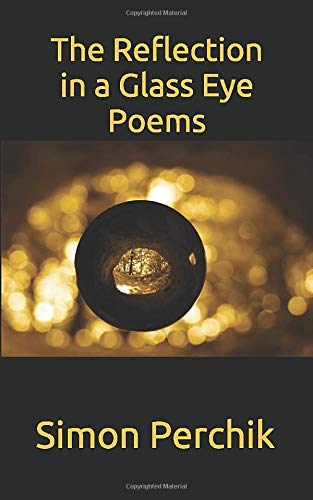
New Book! Simon Perchik - The Reflection in a Glass Eye Poems (2020)


The 184 poems in this collection would never have been written except for the 184 photographs assembled by The International Center of Photography for its Reflections in a Glass Eye published by Bullfinch Press, Little, Brown and Company (1999) to guide me. - Simon Perchik

----

Bio: Simon Perchik, an attorney, was born 1923 in Paterson, NJ and educated at New York Univer-sity (BA English, LLB Law). His poems have appeared in various literary journals including Cholla Needles, Partisan Review, Poetry, The Nation, and The New Yorker.

Click to here to purchase this 200 page collection! ($10)


New Book! Poems (1920) by Charles Reznikoff


Poems was published 100 years ago by Samuel Roth of the New York Poetry Book Shop in 1920. The back cover included the information that their book series was “privately printed by V. Di Caprio at 19 Christopher St.” Each volume in the series sold for $1.

Poems includes the two small books Charles Reznikoff printed himself for his friends when he was 24 years old: Rhythms (1918) and Rhythms II (1919). Later editions of his poetry included these same poems further edited to included additional lines and different titles.

This volume includes the poem “Epidemic” (page 14), which for Reznikoff occurred in 1918 and today’s readers are experiencing in 2020.

Charles Reznikoff continued to compose poetry throughout his life. The powerful and influential collections Holocaust (1975) and Testimony Parts 1 & 2 (1978 & 1979) were published by Black Sparrow Press and remain in print today.