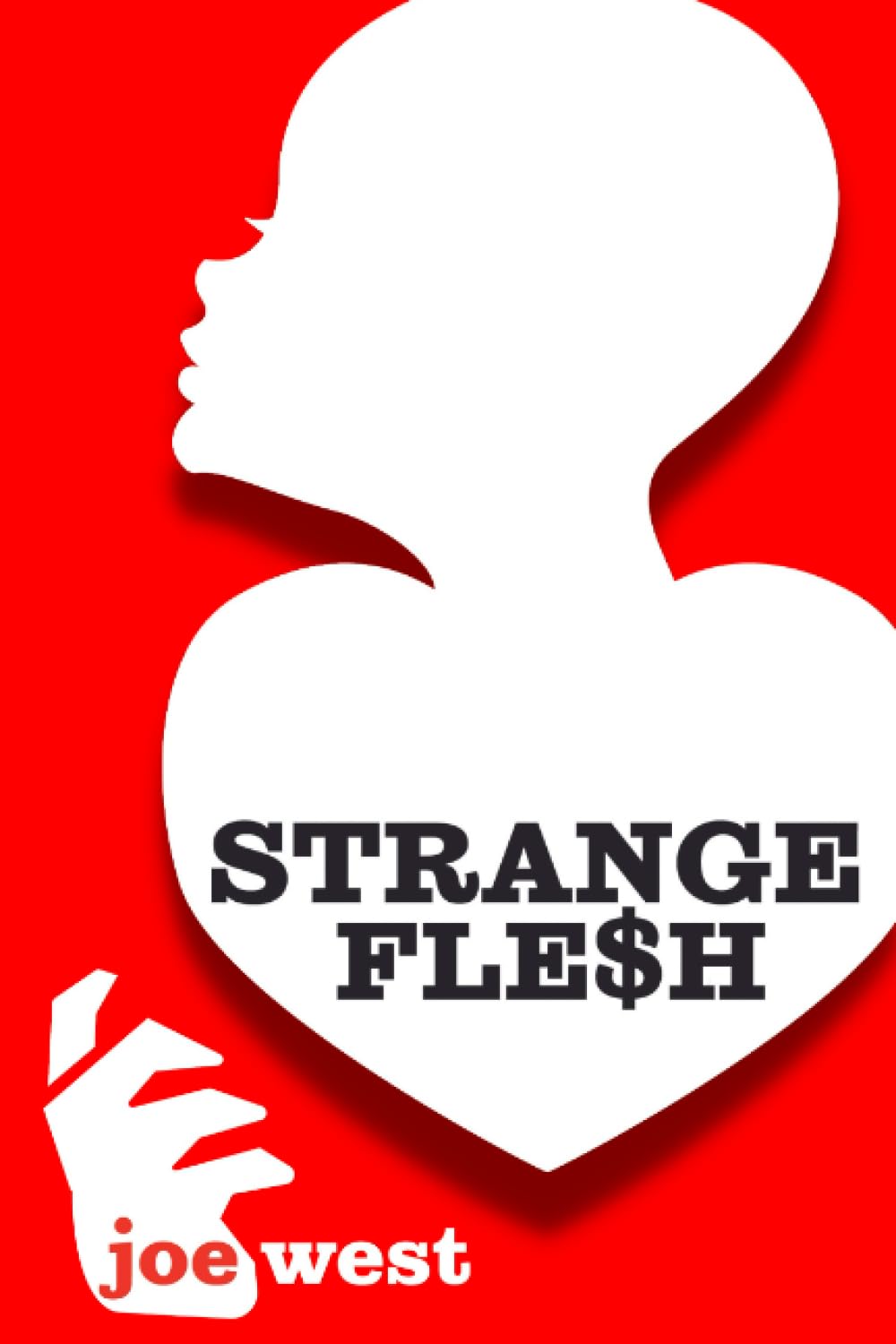
Strange Fle$h By Joe West
Anxiety Press
(2023)
This
book comes at you like a semitruck going the wrong way on the freeway. And Joe West is not about to hit the
brakes. In some ways reminiscent of
Bukowski, and in other ways reminiscent of Whitman, this story is shocking and
repulsive on the one hand and tender and touching on the other. Gritty and crass versus uplifting and
sensitive. The protagonist Frederick
Bickel is a master of caustic observations and a fountain of unexpected yet
hilarious descriptions. It’s been a long
time since I’ve read a novel this entertaining or this good. A slice of life account of blue-collar working
class-struggle that questions why anyone suffers through it when the payoff at
the end is always the same. An
exhilarating romp through the American
low life as it truly is.
By
the author’s own admission, and the protagonist’s constant personal beratements
we all learn early on that Freddie is not a nice person, is a class A fuck up,
and doesn’t much give two shits about anything except for getting high, drunk,
and laid; frequently all at the same time.
Freddie, who has just turned 50, is limping through life, and has come
to expect very little good to come from it.
He frequently intimates that he doesn’t care whether or not he lives or
dies, spends an inordinate amount of time contemplating suicide, and does as
little as possible to change his station in life. He works as a security guard at a high-rise
office building in downtown Saint Louis, Missouri and has little to look
forward to except for ogling twenty-something Sunday, a curvy stacked bombshell
who works as the receptionist on the rarified ninth floor, and engaging in
conversation with Thom, a homeless ex-radio deejay who inhabits a dumpster
outside the building. Sunday initially
won’t give him the time of day, while Thom has all the time in the world that
causes Freddie to find him endearing:
He
smells like wine and cigarettes, firewood smoke, McDonald’s
cheeseburgers with extra pickles, and chocolate pudding cups. Thom is what I imagine Christ was like. Just a good guy you could have a beer with,
who made you feel better without making you feel like shit for it. I cannot help but root for him. We are both born losers, just with different
jobs (p. 12).
While
Sunday rubs shoulders with the corporate muckety-mucks Freddie knows that she
may be in their world but she is not of their world. He and Sunday have a lot more in common than
she realizes.
There
is a thin line between Sunday up here and me downstairs, We are both merely needed, not
necessary. Someday we’ll both be replaced
by the next generation of pretty idiots.
A workforce of ambitionless, brainless, borderline alcoholics yearning
to have their lives predetermined for them by an all-knowing, all-powerful God
called America. Until then, we are just
hoping for the best and preparing for the worst (p.23).
A
third of the way through the narrative Freddie espouses his true feelings
towards what it’s like to be a cog in the machine that is corporate America:
The
corporate robots file into the lobby as they have programmed themselves to do
since getting hired. Everyone looks
disappointed to be here yet again. The
saddest people that I have ever seen leave this building are the retirees on
their last day. Two-thirds of their
lives comes to rest in a Banker’s Box accompanied by a sheet cake and a signed
card. There is no joy, no anticipation in
their eyes for a hard-won freedom as they shuffle towards the front doors
knowing they are never coming back inside (p. 73).
Freddie
meets Sunday’s mom Jerusalem when he helps her take some boxes out to their
waiting vehicle and mom immediately invites him to dinner. Here the heartbeat of the story begins to
thump as mom becomes revealed as a partier who revels in Freddie’s after dinner
pot stash and shortly thereafter gets Freddie into bed. It wasn’t very difficult on either count as
Freddie is adept at scoring all manner of drugs and is blessed with being a
sexual athlete capable of instantly achieving erections and occasionally experiencing
multiple orgasms. Sunday has a
seven-year-old son Octavius who Freddie takes a shine to. Soon Freddie is a fixture in their household,
and the drinking and drugging is such that Sunday unwittingly climbs into bed
with him and he unwittingly penetrates her while she’s half asleep thinking
that she is Jerusalem. He realizes his
mistake, as does an annoyed Sunday, but both remain quiet about it, and Jerusalem
remains clueless until Sunday turns up pregnant.
Freddie
is filled with remorse when Thom unexpectedly dies. He pays for a meager pauper’s funeral and as
it comes to a close, he questions his own existence through the lens of Thom’s
life:
…He
was looking for something that he couldn’t describe to anyone, but I figured it
was what most men are looking for: the meaning, the reason for it all. Why are we even willing to try and shovel the
shit life gives us all in the first place?
Who the fuck knows is all I ever got by going down the rabbit hole, be
it sober or tripping on psilocybin tea,
To
discover life is meaningless is to declare insanity. To admit this cosmic chess board we all move
upon is nothing but a figment of our collective imaginations, that there are no
rules, no God or grandparents waiting patiently for us when we die, is when the
thin line between civilization and chaos disappears (p. 114-115).
A
recently divorced and completely disgruntled mass shooter gets past Freddie one
day, makes it up to the fourth floor, opens fire, and kills his ex-wife. Freddie summons the courage to run towards
the danger, sees the man kneeling over his victim, sneaks up on him, and
severely strikes the man over the head with a fire extinguisher. Touted as a hero, he is given a $15,000
reward, and life is good. Easy living is
not the forte off Freddie Bickle and he finds a way to screw it all up when he
takes the two women to Las Vegas to get married as a threesome. Now the hero is reviled on social media and
shortly thereafter fired by the self-righteous office manager. Lost and
rudderless he finds another job but hates every second of it.
Redemption
of sorts occurs when Freddie wins a wrongful firing lawsuit and gets hired back and elevated from security
guard to receptionist. Sunday decides
that she doesn’t want to raise the baby and that she wants out of the threesome
relationship altogether. Now richer by $25,000.00,
Jerusalem and Freddie decide to give it a go at raising the baby when it
arrives and supporting Octavius in any way they can which they know is going to
be difficult when it’s discovered that he is autistic.
The
kid, though, is doing real good. I got
him into a private school for special needs children. His teachers have found a shitload of problems:
dyslexia, Autism, Add, and fucking depression.
How in the fuck can a little kid have depression? But it’s all good. These people take care of kids like him every
day, they even got degrees in college just so they could. Life never ceases to amaze me (p. 223).
From
degenerate semi-drug addict and functional acholic to quasi-responsible
step-grandaddy Freddie Bickle’s hero’s journey was rife with mistakes, fuckups,
and misguided attempts at trying to help people so dysfunctional that they
wouldn’t even help themselves. He went
from not caring if he died to having a reason to live. At it’s core, this is a book about redemption,
and it’s a fool’s errand trying to predict who is and who is not redeemable. Someone has to be open to the idea of it, and
when they are, fate never ceases to amaze any of us.
* * * *
Reviewed by John Krieg
John Krieg has written many books. His recent book of five short novellas is entitled Zingers.