Wednesday, October 31, 2018

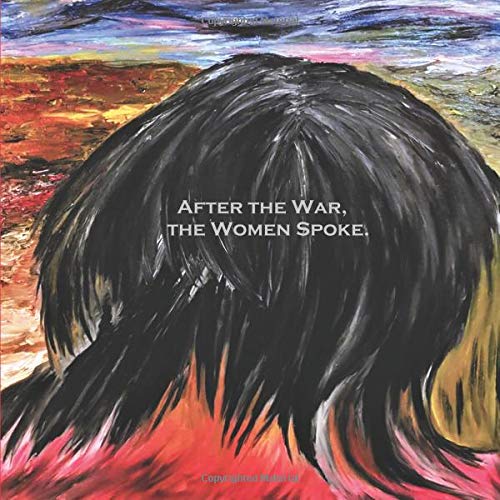
New Book! After The War, The Women Spoke by Katia Aoun Hage


The words in this volume reach to the deepest part of the souls of the strongest participants in all war - the women. This is a collection of art and poetry created by Katia Aoun Hage which will enhance humanity's grasp of both the true impact and the only real heroes of war - unarmed women and children. 

Speak my soul
of the ebbs and tides
of that deep ocean
where you live in.

My ears long for your truths
my heart opens up
to let you in
my womb feels
your gracefulness.

Let your words
reveal the purpose
of a life
longing to be whole.


We encourage our neighbors to buy Cholla Needles books at Rainbow Stew, Space Cowboy, and Raven's Books. Support our local distributors!

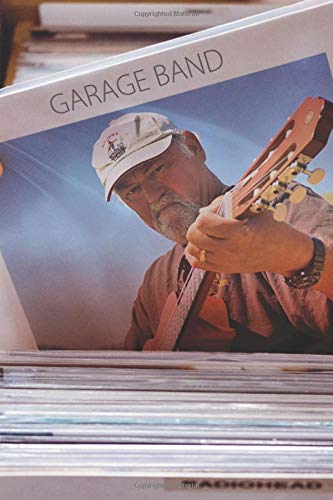
New Book! Garage Band by Dave Maresh


Let's face it, a Garage Band is a rite of passage for every American teenager, from 1954 till today. Whether as a full participant, or a by-stander who wished they had the nerve, or simply an audience member who loves to dance, garage bands define Americans. In this short novel. Dave captures the emotional experience of being a part of this great institution. 

Two other short novels round out this 360 page look at growing up and being grown up in America. If the final story doesn't have you rolling on the floor laughing, you probably slept through 2016. Dave has written a wonderful parody of a truth we still wonder about. It's hard to decide if it was all a bad dream that we're still a part of, or reality. For Dave, this doesn't matter - let's look at the fun of the experience. Dave doesn't "pick sides", he picks at the truth until you can't help but laugh. I'm sure Jesus, one of the central characters in the story, is laughing along with us. 

Good times!!!


We encourage our neighbors to buy Cholla Needles books at Rainbow Stew, Space Cowboy, and Raven's Books. Support our local distributors!

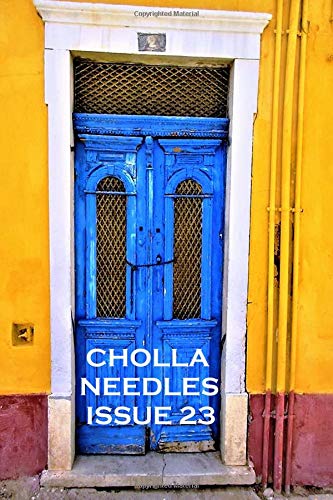
Cholla Needles - November Issue Released!


Cover by Mark Evans


The fine poetry & stories in issue 23 are by

John Brantingham
Susan Abbott
Gabriel Hart
Gillian Spedding
Dave Maresh
Tanene Allison
David Chorlton
Tobi Alfier
Robert DeLoyd
Mari Collier


We encourage our neighbors to buy Cholla Needles books at 
Rainbow Stew, Space Cowboy, JT Coffee, and Raven's Books. 
Support our local distributors!

Saturday, October 27, 2018

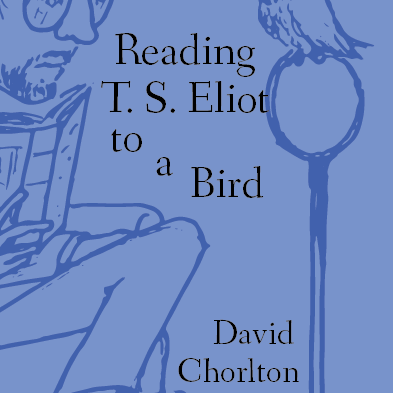
Reading T.S. Eliot to a Bird by David Chorlton

Reviewed by Cynthia Anderson

What would a bird think of T. S. Eliot’s “The Waste Land”? My guess would be, not much—which David Chorlton confirms in the title poem of his latest collection. The bird in question, a tame starling, pecks at the words on the printed page, then proceeds to go about his business with no concern for the words read aloud—“as creatures do / for whom the present moment / is the only unit of time.”

The real question is, what do we humans think of birds? In these poems, Chorlton shares his love of the “chattering, whispering world,” letting the stories of animals bring us to a fuller appreciation of this fragile planet. From jaguars and moths to ocelots and trojons, these poems are fully inhabited by non-humans—and filled with the sense of time immemorial they emanate. We meet “ants in columns leading back all the way to creation”; we are told “the wind cannot be known” as it provides “no information about its place of origin”; we learn about a river that cannot be known either—“it kept changing course and defied the mapmakers, who grew desperate.”

Chorlton is a careful observer, using spare, vivid language to convey the tragic losses and degradations of other species that are mounting around us. In “Jaguar Variations,” an extended meditation on that elusive hunter, he writes, “Nobody knows / how it feels to break out / from mythology and tear a piece / from the world to satisfy an appetite / the feeding of which requires / all the space civilization left unused.” The jaguar, managing to find a place where he can still relish his solitude, has “no way to know / in the moon’s stony light / how close he is to being / the last one of his kind.”

In “A Black Witch Suite,” the black witch moth assumes mythic proportions, a sign whose presence transcends time—“In the Aztec twilight / many souls turned into / moths. To this day / they have endured. / Whenever an empire burns, / flakes of the ash / float through the centuries / on the breath of immortals.”

The story behind haboobs, those towering walls of dust bearing down ever-more-frequently upon Phoenix, comes to life in “Dust”—the earth itself flailing at a city that has co-opted everything that came before. Chorlton writes, “not a bargain in sight at the mall, / no progress to believe in, no / history to deny; only the land the white man stole / reassembling itself as a cloud / and moving back to take the city / built where the Hohokam / had once / been neighbors to the sun.”

While Reading T. S. Eliot to a Bird confirms that the waste land is indeed upon us, these poems are studded with moments of quiet, immortal beauty. A flower, the night-blooming cereus, has the last word—“they break open for a night / in which perfume overpowers / the form, the promise / takes the place / of the promised land.” In the tradition of great nature poets like W. S. Merwin, Chorlton uses his mastery of language to help deepen our relationship to the natural world—just when we need it most.
David Chorlton was born in Austria and grew up in Manchester, England. He moved to Phoenix in 1978 with his wife, Roberta, an Arizona native. He is an artist, photographer, teacher of creative writing, and author of nine collections of poetry. To learn more, visit www.davidchorlton.mysite.com/

*     *     *      *

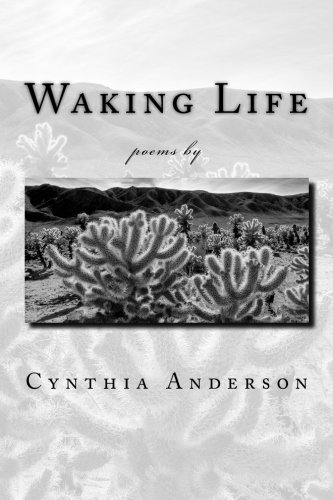
Cynthia Anderson's most recent collection of poetry is Waking Life. You can read about all her books at her website Cynthia Anderson, Poet


Friday, October 26, 2018

Tobi Alfier - There’s No Place For Bullies In Poetry! (Part Two)


Want the bad news first or the good news? Last week I said “stay tuned for my horrible experience with a poetry class, and why I LOVE workshops”.  Bad news first?—you hear all about the things you did wrong, and then you get the amount of your small raise. Good news first?—you get your small raise, and then find out everything you did wrong and why it’s not bigger. BOTH sound like hell to me!!! So I’ll tell you the bad news first that’s really good…

I learned the hard way that semester-long poetry classes are generally not my friend. Years ago I took the class from hell. Besides the evening traffic, the instructor was a very well-known and excellent poet, and had a number of groupies who followed from class to class. Unfortunately, we just did not have the same aesthetics regarding poetry. Or teaching.

In response to a poem written for an assignment, the teacher said to me “Hearts don’t crack, change it”. I know hearts don’t crack (my career plans when I was younger were mommy, then doctor). I thought it was an appropriate line for the poem, and the subject.

The teacher said to me again “Change it. Everyone always does what I say because I’m always right!

I dropped the class and did not change the poem. 

Winter Water

The tide burbles up,
rushes into the toe-holes
our feet make as we take
our last walk.  We converse
about the small things,
kick stones with
misplaced grief.

Salt spray refracts our hearts
cracking, we see the shells
as if mounted under glass.
We head toward our sandals—
my dress absorbing the
colors of the crashing foam
your legs purpled with the cold.

Small crabs clamor in
the warm wet of our
impressions—the front
of mine deeper as I
lean toward you, your
heels deeper as you lean
away.  I feel spent as beach grass.

The symphony of winter is an
appropriate final audience for us—
witnessing our undoing.

Previously published (and nominated for an award) in Seven CirclePress

Workshops:

They are an opportunity to live the writing life for a week, meet fellow writers, go to craft talks, discussions, and readings by poets AND other types of writers as well. Generally the mornings are spent in your dedicated workshop with a brilliant, generous, wonderful workshop leader who is there for YOU, not for themselves.

Sometimes there is an “I got my MFA from BFD college and I know more than you” person in the group. I watched one of these people decimate the nicest woman because she liked Larry Levis! Workshop leaders can, and do, handle this kind of crap. I have learned something in every workshop I’ve attended. Living in a dorm room is a memory I could probably do without, but it’s totally worth it for the good stuff.

A few notes about my workshop experiences:

  1. I have always gone to workshops on the West Coast. When my son was little I wanted to be close enough to get home easily. My guess is East Coast workshops might be a bit more competitive but I really have no idea. (Full disclosure: I did apply once for Breadloaf and was denied). {Editor's comment: note that MUCH great poetry is written in between the "coasts."}
  1. Google the faculty and read their work. Choose a leader who would be a good match for your writing style. This is NOT because you don’t want to grow. But for example if you don’t write political poetry, don’t choose a workshop leader known for their political poetry. It wouldn’t be fair (or fun) for you, or the rest of the group, to spend a week in that environment. 
  1. Sometimes I choose a workshop for the subject. For example, I spent a week with Mark Doty on “crossing genres”. I learned that I will never write a memoir—I’m so boring, I wouldn’t even read it. But I learned about micro-fiction. I’ve only written seven or eight micro-fiction pieces but they have all been published. Thank you, Mark Doty
  1. I learned that Heather McHugh is funny as hell, and more generous and brilliant in her pinky than I am in my whole body. I wrote my first (and probably last) “literary” poem ever, in her workshop.

    Untitled
     
…who hears the voice
in rooms unseen,
but cannot bear to
tip the hand
or risk all portent of
misunderstanding.

A constant in otherwise bewilderment
the beneficent sun bestows a quiet heat
of fragile summers.

Sorrowful and
solitary, the one
voice an anchor in
an abundance of drowning.


  1. Kevin Young explained Odes in the most beautiful and articulate way. When I came home I wrote “Ode to Candy”, a poem I NEVER would have known how to write before. (It’s too long to post here but if you put your name and email address in the comments below, I’ll send it to you).
He also explained why I hate words that end in –ing and that they’re called gerunds. I still use them when I have to, but it will be a thoughtful use of them, not a lazy use. I try to find ANY other way possible to write a line before I use a gerund. {Editor's comment: and others of us will keep on activating our energizing world and going on with our poeting =:-)} 

And on and on. Yes, they can be expensive. And the whole dorm thing is kind of odd. But if you choose wisely, and find a workshop, and leader that excite you, you will learn and grow both as a writer, and as a human. And you will remember everyone (in a good way). When I read that Pete Fromm won the Pacific Northwest Booksellers Award for “If Not For This”, and remembered that I sat in the front row sobbing as he read a portion of it one afternoon at Tomales Bay, that’s an experience that’s mine, and I will hold it forever.

Note: a lot of workshops are for full weeks (or longer) but some are for long weekends. You’ll still get a lot out of them, and of course they are less expensive. Obviously, unless you live in France, Greece, Hawaii, or Italy…they will be more expensive too. As I said above, choose wisely. You will have a blast, learn a lot, and you will not regret it.

- - - -

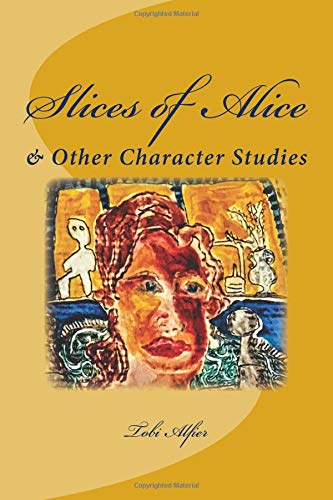
Tobi Alfier's most recent collection of poetry is Slices Of Alice. She is also co-editor with Jeff Alfier of the San Pedro River Review. Don't miss Tobi's columns on the craft of poetry: insert your email address in the "Follow By Email" box to the right of this article and you'll be notified every time a new article appears.

Saturday, October 20, 2018

Tobi Alfier - No Place For Bullies! (Part One)


Whether you are in a class, a workshop, a small group or an open mic, nobody has the right to make themselves feel taller by making someone else feel smaller. I have seen it. I have felt it. I am proud to say I have never done it, and proud to say that I have given poets the courage to keep on writing, even when they thought they were terrible and did not deserve that privilege.

Who has the right to make anyone feel like that? I can count on one finger the academic person who acts this way. I will never go to a reading of theirs. I will never spend one dime on anything  they’ve written. If their car was broken down in the rain, I would give them a ride into town. But I would not talk to them about poetry. And I will not name that person.

My friend Denise Buschmann is a Southerner transplanted to Indiana. Years ago, she was bullied so badly by a critique in a writing class over a line of Southern vernacular, she almost stopped writing poetry. She thought, “If this is what it’s like to participate in the writer’s community, I want no part of it.”
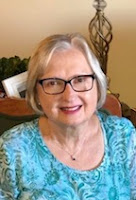
Denise says “I have always been a good writer and was starting to write more and more poetry. I took a class so I could learn and improve. What made that incident so bad was after one person told me I couldn't say "cut the lights or air conditioning ON", everyone at the large table adamantly agreed with him. Then three or four of them fiercely spoke up and said the same thing. Finally, another person “explained" that you CAN say "cut the lights," because it means to turn the lights off, but then agreed that you couldn't say "cut" with "on" because it does not mean to turn the lights on. 

She added, “I had used that phraseology my entire life and had never even questioned it. I was frankly shocked that no one had ever heard of “cutting” something electrical “on”. When I left the class that day it felt like I had been blindsided on a battlefield.”

After that unproductive class critique, Denise emailed her old neighbor from her hometown, who is a nuclear physicist, and asked if he knew what "cut on the lights" meant. He replied, "I know that you know that I know what that means!" She was so rattled by the nasty critique, she made him say what he thought it meant. He said, “It means to turn the lights on, of course.” She was not crazy!!

That weekend, Denise found her first LinkedIn poetry group online (the group I moderate – Poetry Editors and Poets). She explained what had happened and respectfully requested feedback. I asked her to private message me and that was how Denise and I met. Here is the poem she sent me.

Digital Immigrant on Heat Control in July

Shacktown community, Yadkin County, NC

It was pleasant without AC in my great-grandparents’ house
third Sunday each July, at the reunion on Mama’s side. 
The old folks in North Carolina knew how to plant 
their homes in the midst of generous trees 
to shelter them from sun.


Madison, GA


I toured an antebellum house once 
—one that Sherman didn’t burn.
Outside, it was smouldering.*
Set among ancient ash parasols
it had a wide hallway, running front door to back.
Our guide said, summers, they’d leave doors wide open
to capture the east wind.
Sometimes wild animals wandered in at night.

Center community, Yadkin County, NC

Sitting back in Daddy’s Tar Heels chair
under the brim of our four-vehicle shelter 
at Grandpa’s homeplace—Five Oaks—
I listened to a gentle, patient wind 
whisper something soft and kind. **
That same friendly zephyr
swishing and rustling leaves overhead
stroked my face, soothed my spirit.


Carmel, IN


We moved North July 1,
the house cool as could be midday,
when we stepped inside.
How long could we go, I wondered, without …
“Cut on the AC!” my husband interjected.
After several rounds, 
I knew when to concede.

D.C. Buschmann
June 10, 2013
* Taken from Sherman’s memoirs: "Behind us lay Atlanta, smouldering and in ruins, the black smoke rising high in air, and hanging like a pall over the ruined city."
** From James Taylor’s “Carolina in My Mind.”   

Denise stuck to her guns on that poem. It was her poem. Workshop groups are meant to point out places that aren’t clear, or possibly could use revision. They aren’t meant to gang up on someone because they don’t like a poem, or aren’t familiar with a particular phrase.

Has my friend Denise’s writing gotten better since 2013? She has grown, just as we all have. And her confidence has grown, and she has blossomed. Although she still remains unpublished in her home state, she’s been published many times by Indiana journals and on four continents (and in San Pedro River Review), and has won awards, (which she’s never gloated about or shoved down that guy’s throat, so he must’ve gotten nicer too.)


photo: Angelo Esslinger
In fact, Denise says “The person who sternly told me I couldn't say "cut the lights on" many years ago ... we were in a critique group together, after that, for four or so years and we now respect each other’s work and are friends. The last time we both were at a third critique group, he liked my poem that I brought so much, he asked if he could keep it instead of giving it back to me with comments. I was so touched. He kept saying ‘Wow. Wow.’ and asked how I wrote that. Such a 180.”

This is unfortunately a common issue I see with critique groups that have no leader strong enough to stand up to the “chest pounders”. This is why I don’t allow people to post their work on the LinkedIn site I moderate. People can be mean. I don’t know if they have any idea what kind of effect that can have on a newly-brave writer, just getting up enough nerve to show their work in public. I don’t know if they care.
I am sorry to say that Denise is not the only writer I personally know who almost stopped writing. We all have our strengths. We all have our weaknesses. But we all write for a reason.  Shame on anyone who tries to take that away from us!
Next week: stay tuned for my horrible experience with a poetry class, and why I LOVE workshops. I will talk specifically about Tin House, Tomales Bay, Catamaran, and Desert Nights, Rising Stars at ASU. I will talk peripherally about a few others.
- - - -


Tobi Alfier's most recent collection of poetry is Slices Of Alice. She is also co-editor with Jeff Alfier of the San Pedro River Review. Don't miss Tobi's columns on the craft of poetry: insert your email address in the "Follow By Email" box to the right of this article and you'll be notified every time a new article appears.