Wednesday, July 26, 2023

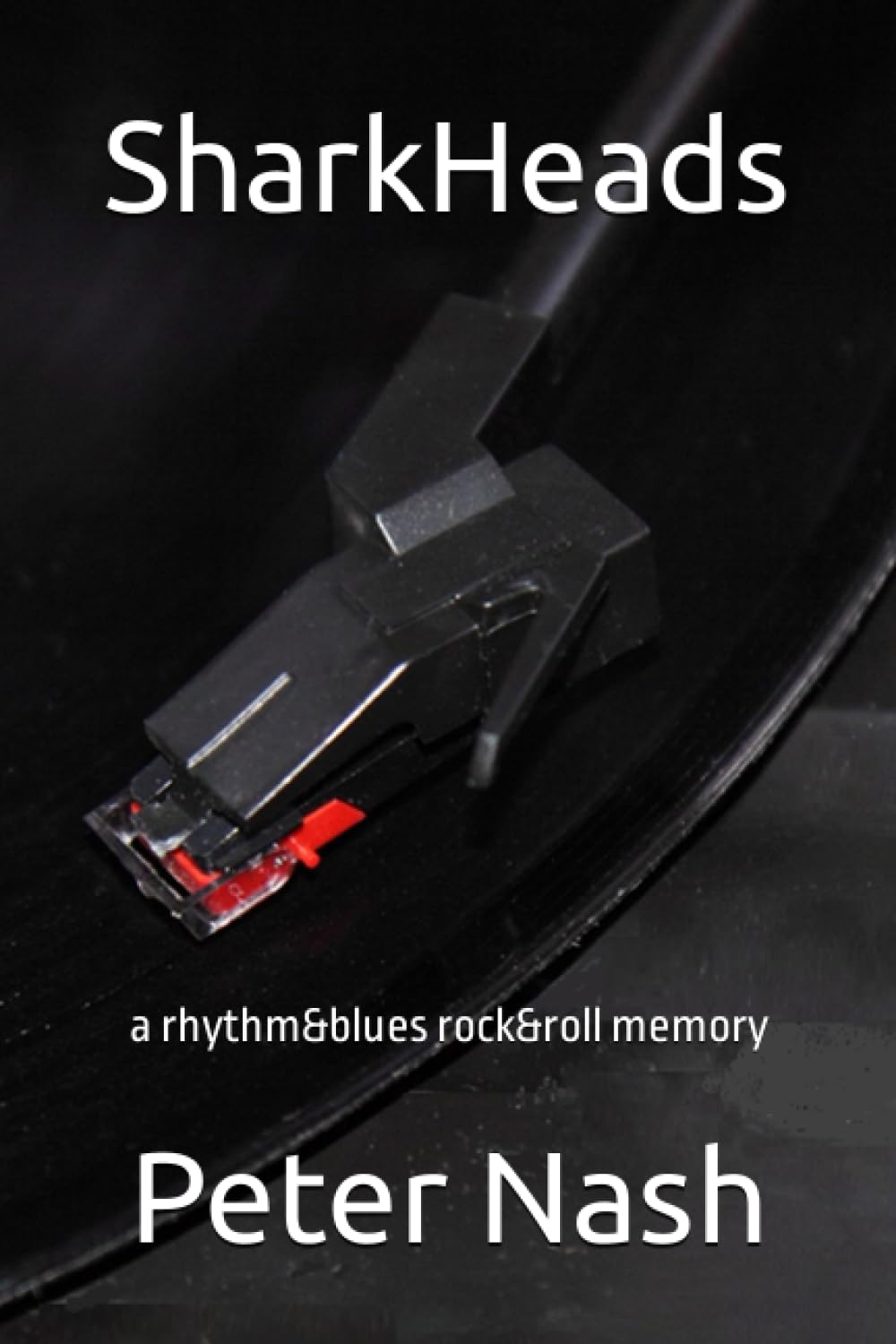
New Book! SharkHeads by Peter Nash


This is the story of my 9 year music business career. It includes my memories of these vinyl heroes and mentors who colored my world while I grew up inside the business:

Henry Stone, Music Biz Legend and boss
Milt Oshins: Boss and teacher of how to get it done
Jerry Wexler: Atlantic Records producer
Joe Galkin: Manager of Otis Redding
and ButterBall: Hero DJ and adviser

I also share stories of some of the stars I met along the way, including

Elvis Presley
BB King
James Brown
Led Zeppelin
Rod Stewart & the Faces
Aretha Franklin
Allman Brothers
Dr John the Night Tripper
Sam & Dave
Ike & Tina Turner
James Taylor
Van Morrison
President LBJ
Bill Cosby

Plus a few names that I was down front or backstage with…
The Doors at Dinner Key (No, he didn’t pull his winky out)
Otis Redding
Hendrix at Monterey Pop
Ike & Tina Turner
Diana Ross

And special thanks to Sir Rich and Cholla Needles. He’s a music cat and gets it done.

Visit my work:
peternashportraits.com

- Peter Nash


Also by Peter Nash & Cholla Needles:

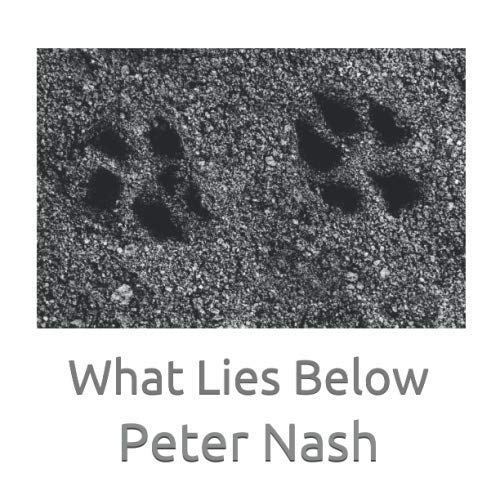
WHAT LIES BELOW (Photo Essay)

New to the desert floor I feared rattlers and scorpions and thorns and tripping over the uncertainty under foot. Instead of taking in eye-level views I perceived mystery and danger hidden in the shadows. I came from the east, the land of paved paths below and wires above.

In the desert deep shadows hid the unknown. And then I heard the piercing rattle of death and that did it. My eyes guided my feet. I saw beauty not danger and never looked up till I recorded the darkness and light. The hidden world under foot in the desert. I still don’t look up, not from fear but the wonder of what lies below.

"My work is about love and endearment, without which none of my portraits would succeed. My gift is to capture what already exists without intrusion.” 

- Peter Nash


Tuesday, July 25, 2023

Review: Tornado Season by Courtney Craggett


 Courtney Craggett has a special understanding of America’s complicated immigration issue, which at its core refuses to recognize that people south of our border are just people, who like all people, only want a fair shot at life and a better future for their children. Dia De Garcias and Frontera Seca amply illustrate the convoluted logic that determines who are and who are not good citizens, and the reasons why.  But Pledge truly brings the heartbreak front and center when an elementary school teacher is drawn to Alexis, a Mexican boy, and attracted to his father Antonio knowing that the authorities viewed them both as illegals, and also knowing full-well the hurdles that a life with them would entail, but receptive to its possibilities just the same:

That weekend I saw our family, my family.  I saw Antonio and Alexis, Alexis little sister, me, one of them, cooking them breakfast, helping Alexis with his homework, telling Antonio to be careful at work.  This was why I had become a teacher, to belong to someone.  I hadn’t expected it to happen like this, but life could surprise you.

But life intervenes and Alexis doesn’t show up at school the following week or for another weeks’ time.  She goes to their home, but the residents inside will not answer.  Everyone seems to be hiding.  Finally, reality as it so frequently occurs is the southwest, sets in:

“What happened to him?” I asked the secretary.  “Will he be coming back?  Did his father request he move to a different class?”

“He’s gone,’’ she told me. “Deported.

It happens just that fast.  It is just that devastating.  It is just that final.

Another story in this collection portrays an intimate familiarity with societal dysfunction that all too frequently manifests itself on the microscale level as domestic violence.  Goodness and Mercy is a particularly poignant piece about a college educated female social worker who grew up in a household where at age 12 she had to call the police on her father who was perpetually beating up her mother.  They divorce. The father remarries. The mother also remarries to a man who also beats her. Family unity, such as it was, was laid riven, and she often wonders if she did the right thing, if it really made any difference at all?  The social worker rationalizes her very existence, her self-image,  her career, and her purpose in this passage:

I grew up and became a social worker.  It was the only thing that I could become.  There was never any choice.  I specialized in abuse prevention, but the prevention often came too late.  I saw the worst things, things you wouldn’t believe yet still have to.  Things that are too absurd and too horrible to be fiction.  Sometimes I saved lives.  I went home at night knowing that a child would live at least a bit longer because of a decision I’d made.  Other times I made the wrong call, and children who were in my care were hurt, even killed.  That was the nature of being a social worker.  I could have done something easier with my life, but what?  I think I was born to fight.  Besides, terrible things were going to happen to these kids with or without me…but at least this way I could stop it every now and then.

There are a few stories that approach the magical realism of Gabriel Garcia Marquez.  Astromorphosis and Volcano Climber both bridge a gap between reality and fantasy, with the greater good of humanity hanging in the balance, if only the goals of the fantastic can be achieved.

This is primarily a collection of short stories about blurred lines, about those situations where there is no best or simply correct answer, about how one stance taken can set off a sequence of unintended consequences. These are frequently confusing and messy stories – like life on the border; like life itself.

This is a wonderful book, and kudos to Courtney Craggett for not taking the easy way out, for taking on the tough subjects, for challenging her readers to look inward to decide where to draw the line, or to see where lines could never truly be drawn.  She expertly negotiates those gray areas.  She takes on the blurred lines, and embraces them.

 * * * *

Reviewed by John Krieg
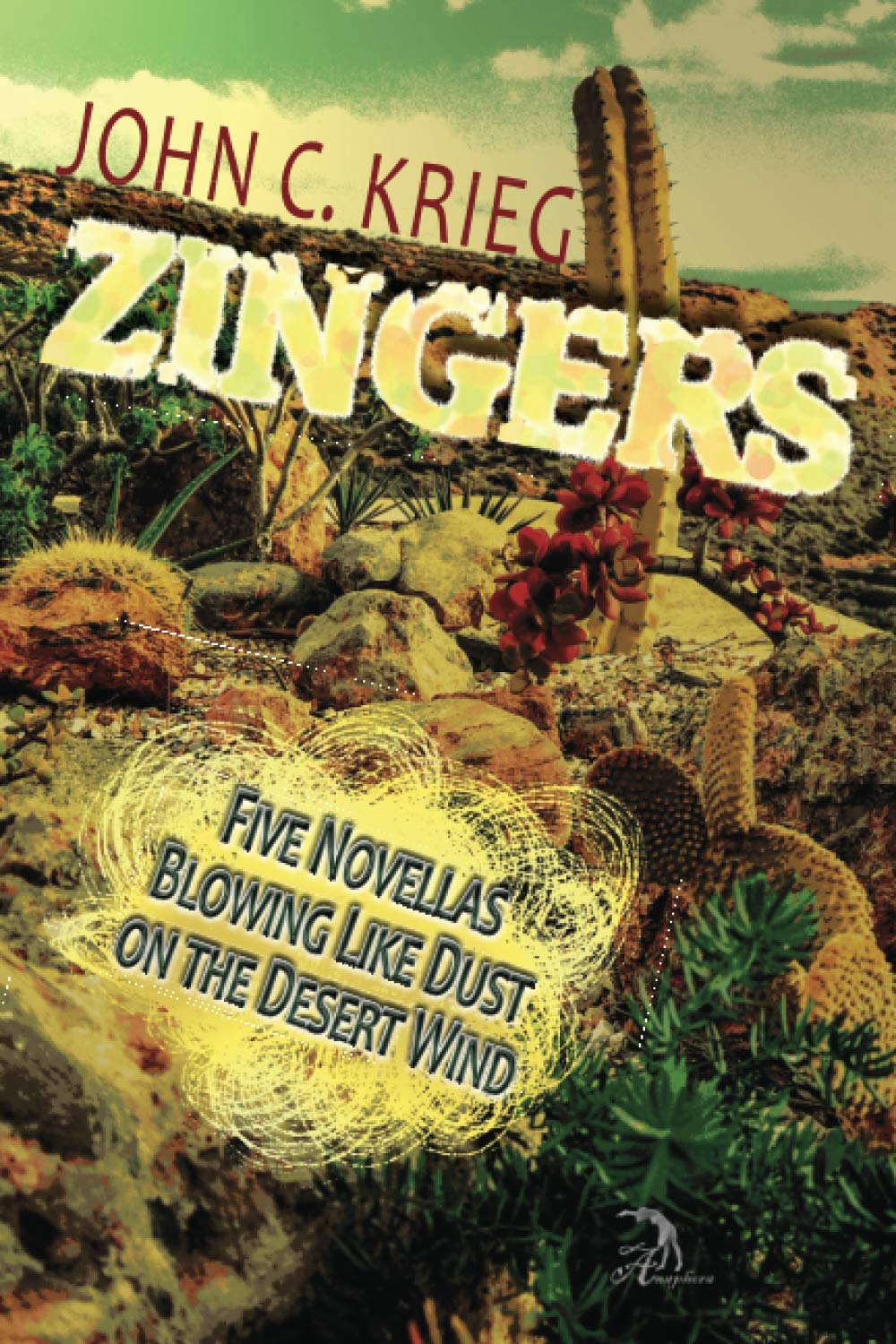
John Krieg has written many books. His recent book of five short novellas is entitled Zingers.


Saturday, July 1, 2023

New Issue! Cholla Needles 79


The exciting cover art is by Lily M. Capra

The magical words within are by:
Bonnie Bostrom
Ron Riekki
Joy Gaines-Friedler
Christien Gholson
Miriam Sagan
David Chorlton
lalo kikiriki
J. David Rawn
James Marvelle
Johnny Kovatch
and Bobby Norman


Friday, June 30, 2023

New Book! Invisible Orchestras by Joy Gaines-Friedler & Ron Riekki


Joy Gaines-Friedler 
For 20 years Joy Gaines-Friedler made her living as a photographer. She is the author of 5 books of poetry, her most recent is Capture Theory. Joy teaches Memoir & Poetry for non-profits & communities at risk in S.E Michigan.

Ron Riekki 
Ron Riekki’s books include Posttraumatic, and My Ancestors are Reindeer Herders and I Am Melting in Extinction.


Saturday, June 24, 2023

Book Review - Proving Grounds by Jean-Paul L. Garnier

Proving Grounds by Jean-Paul L. Garnier
Reviewed by Susan Rukeyser

Proving Grounds, by science fiction writer and publisher, Jean-Paul L. Garnier, is a short and intense collection of anti-nuclear weapons protest poetry. It is a fierce reckoning with these terrible weapons, as well as our Cold War childhood fears that changed but never went away. This book demonstrates how powerfully poetry can become activism: returning our focus to a vital issue, reckoning with denial and apathy, and, finally, offering hope.

Pocket-sized, with spare, clean text, this book fits in your hand like a private missive from deep within the resistance – a critical call to action. The glossy front cover, designed by the author and Dain Luscombe, is a photographic collage of many different nuclear explosions. It lends a sense of urgency that sets the tone for the collection. Each page spread features a poem on the right, and, on the left, another photograph of another nuclear explosion. The repetition of these horrifying images, the sheer number of them, becomes part of the experience, always in the reader’s peripheral vision.

The exception to this pattern in the two-page poem, “13,890 Nuclear Warheads,” which ends with a shocking fact:

 and you have seen the image of the cloud

but not as many times
as they have detonated
two thousand and fifty-six


Immediately following this is the poem, “12 Missing Nuclear Bombs” which includes the line, “accidents every seventy-five days."

In “War Criminals,” Garnier references Operation Paperclip, which secretly brought Nazi scientists to this country, following World War II, to work for the US Government – another lesser-known fact that reminds the reader of the inherent immorality of these weapons:


what did the Jewish scientists of the
Manhattan Project
feel, as the Paperclip arrived
bombs away to space

 Details like these serve to jar the complacent reader into renewed attention on the nuclear threat. Garnier acknowledges, in “Remember”:


easy to forget, many wars since
drugs, terror, disease
enemies we cannot nuke

 The relatable, shared trauma of classroom “duck and cover” drills haunts this collection, perhaps most poignantly in “Under My Desk”:


under my desk

counting on little fingers

waiting for the Russian bomb

no one said why


Outrage for what that vulnerable child was put through, what we were all put through, burns through this collection.

Proving Grounds holds a pointed, seething contempt for former President Ronald Reagan, who fills the back cover with a photo from his movie star days, gun drawn and jaw set, as Deputy Marshall from the 1953 Western, “Law & Order.” Behind him is a fiery explosion.

From “Reagan Baby”:

 Reagan, you’re my birth rite

leader of a world

where everything is owned

and I’ll kneel under my desk
in your honor.


But Reagan is just one part of the larger military industrial complex. Garnier laments the devastation caused by “Lockheed, Boeing/ and all you engineers of death” in “Do What You’re Good At”:

 they could give us the stars

instead brought micro-suns
burned even the bones of the people
dusted every breath with cancer


Underlying this book’s fierce tone is heartbreak over squandered opportunities for peace. Hurt and anger are vented through vulgarity, used effectively at points throughout the collection, connecting us more directly with the strong emotional response that is appropriate when remembering how rich war mongers played with our lives and our planet. From “Shield Yourself”:

 I picture an impotent slob: suit, phallic tie

drunk on all the riches of life

wavering over the button

like an orgasm

one wants to hold


This book also takes aim at those who should have known better but were complicit. In “Feynman’s Arrogance,” Garnier writes:


play the game, all smiles
you play to mess with authority, with
restriction
as you open up nature to destruction

And then, with the final poem, “We Can Do Something,” there is a shift, an offering of hope through resistance.

The back of the book has a list of anti-nuke websites; QR codes to help readers find their Congressional representatives; and four pre-written form letters to tear out and mail to them and the President.

In the Afterword, Garnier explains what compelled him to write and collect these poems and how delving into such disturbing subject matter resulted in cognitive dissonance: “it is simply too great a horror for the mind to accept. … This inability to grasp the destructive powers, and their scale, causes us to feel powerless in the face of the bomb. But it is not divine forces we are up against; it is mere men … We can achieve total nuclear disarmament, it is possible”. 

Proving Grounds reminds us that it is necessary. - Susan Rukeyser

______________________

Proving Grounds is available locally at
 Space Cowboy Books
61871 Twenty-nine Palms Hwy.
Joshua Tree, CA

Click here to purchase Proving Grounds on-line ($5.25)
proceeds donated to International Campaign to Abolish Nuclear Weapons (ICAN)
Click here to purchase the musical audiobook


Achievement: