Monday, May 11, 2020

Brenda Littleton - Masks

Joshua Tree Watercolor
Masks

When the outer world foists its fist of volcanic change upon the personal soul, I pause to ponder: where in me do I hold this energy; how in me have I repressed its existence; who am I, if I can fully accept my relationship with this beast slouching towards Bethlehem? 
My specific wondering is about masks. I'm watching a parade of spontaneous masks surface in our collective consciousness. I have struggled with my own relationship with masks, with my personas, with the personas of others in my life. I went to sleep contemplating the new urge to produce masks, and then this morning, Orion Magazine sent me words on The Power of Masks. 
I remember a moment when I was 3 or 4 years old, sitting cross-legged in a longhouse, out on the west coast of Vancouver Island, by Hot Springs Cove, during a ceremony called a potlatch. Single dancers would perform in the center, wearing masks and body dressings. I sat in the shadow of a totem pole with the raven towering above my head. There are many fractured glimpses swarming me now, as I reach back for the story, but all I really need is the link to my first encounter with many people wearing masks. 
And, here I am again, watching a dance of masks, only instead of the dance being at the end of a three-day journey, it comes from an unleashed toss game of pick-up-sticks and chance. 
The Orion article gives me a container of meaning to remind my cellular memory of my lineage, of all of our lineage, with spirit and with ceremony. My wish is for the act of wearing a mask in today's world is one where we summon a conduit with our elders, as we pace out a new path of safety and abundance. 

The Power of Masks: Then and Now

“Mask dances brought the spirit world into being, created a powerful conduit to the afterworld, and summoned safety and abundance and a life free of disease. Every religion in existence has its very foundations in these rituals.”


B. Littleton, Dark Ages 2.0. April 6, 2020

- - -

Make it Matter

Time for reflection,
Time for listening,
Time for letting go, receiving, musing,
Time for gentleness,
For seeking in new places,
For appreciating those of old.

This tide will turn. 

This is wisdom-making:
Drawing a thin line in the sand, an absolute boundary of what cannot be,
to then see how quickly it doesn't really matter. 
To identify your worst fears,
and then have them arrive, unannounced, in full flurry,
But, instead of complete collapse,
you find yourself on the other side,
still breathing
still standing
still longing
still knowing the next, unforeseeable uncertainty is still coming.

Turn to that dark corner pocket, full of those 
"I will never: do that, go there, say those words, feel those fears." 
and let them fly,
free and freely.
Release the don'ts and won’ts and wants.
Start from right now with one beating atom.
See where she wants to flow, and follow.
Invite the next one to join you at the table.
Sew them together after they bury you with unexpected love.

The worst may yet still be waiting.
Tell your gut to expect a miracle!
You may be surprised when they stand up and applaud your foresight,
your preparation you once called despair,
but is now alchemically churned into knowledge,
into a secure way to breath.
Give up what you think is control.

Let go of holding the darkness back:
swim breaststrokes in the night sea.
Stay longer than expected in those grottos forbidden to explore.
Talk to those pernicious friends of anxiety and doubt, flying frayed ends 
of whips and flagellation. 
Listen to their grunts and sighs; let them inside you, guide you, 
ride them as ancient waves and those  old, young lovers,
as they roar you into liminal edges of unformed, foamy wet, new self.
It is time to be thorough;
It’s time to live your own deep-fathomed life,
For this is what you’ve been waiting for
During all those times of no, not now, no.
It is now,
As the ‘center will not hold’ forever more.
Take guidance from Yeats, and Jeffers, and Oliver, and all those prophets
That brought you here into this aleph.

If you have to: clean house, end relationships, kill the old cat;
Sell the car, rent the house, move to an island.
It doesn’t matter

It doesn’t matter
Until you meet yourself on the path
Until you meet yourself on the path where no one else has ever been,
And when you pick your bones and gnaw the left foot calluses for food,
And ancient patterns of having to Know completely dissolve 
while honored for their protective service,
for keeping alive this little girl once left on a logging road
for screaming too loudly in resistance to what was not right and sane,
for what was awful and unkind, and polluted
for what was brutal in loss of that particular petal in a child’s heart,
then soul slides sideways and sighs you inward 
toward the first, and lingering womb-dream.

Listening, and finding the last wave of low tide means 
the next one will soon cover over what is now raw and exposed.

The tide will turn.
Be thorough this time.
Meet yourself to make it matter.

It’s the only love to do. 

By Brenda Littleton, 2020

- - -


The artwork, Joshua Tree Watercolor is an original piece by Brenda Littleton. Writer, poet, professor, literacy of place, Jungian archetypal psychology, equine psychology, alchemy, dream-tending, community, meaning-making, working with gold, silver threads and silk. Born the backside of Vancouver Island; renewed on the black beach of Santorni; risen from ashes in Aguanga; tenderly unfolded in Topanga, busting wide high with inner sky in Joshua Tree.

Saturday, May 9, 2020

Open Readings while sheltering in place

Our poets are finding ways to communicate since we are unable to hold open air readings yet. As they come in, I will add them to this page and update it. If you are a poet who wishes to have your work added to this page, send a link of yourself reading to editor(at)chollaneedles.com - replace the (at) with the symbol @. This keeps the robotic spam out of my email box. Thanks!

This page is continuing - - see menu at the right for the link to Part 2!


Lisa Mednick Powell performing 
"She's Holding Hands With Heaven"
"I was thinking about docs and nurses
and home care workers--and aides
like the ones who take care of my Mother
at her assisted living place in New York."


Kurt Schauppner reading "Haiku For Hope"


Greg Gilbert reading "No Curtain Calls, No Critics"


Susan Rukeyser reading 
"Black and Blue Babydoll Nightie (used)"


M. T. Evans reading "Planned Obsolescence"


Cindy Rinne reading "Field Of Vision"


Robert DeLoyd reading "Bee Poem"


L. I. Henley reading
"The Pig, The Book, The Chia, The Moon, and the Butterfly"
(music by Jonathan Maule)


Isabel Winson-Sagan reading "What We Wrote On Water"
(note - the silence at the beginning and interspersed is deliberate - music by Tim Brown)


Susan Abbott reading "Now Voyaging"


Lara Dolphin reads
"Things I Didn't Put On My Nursing Resumé"


Tim Robbins reading "This Hour"


Tim Robbins reading "Gulf" and other poems


James Franco reading Howl by Allen Ginsburg


Michael Lee Johnson reading Daginne Aignende


daginne aignende - 2 poems
(music by r soos)


Words by Tony Moffeit * music & performance by r soos


Laurie Byro reads three poems


Tobi Alfier - Subject and Form (Not Mutually Exclusive)


A few weeks ago, someone posed a question in a group on Facebook. She said she’d been writing a lot of ghazals lately, and wanted to know if there were any journals that published ghazals.

Read the guidelines! There are times when your writing may be limited—I’ve seen journals that don’t take Haiku, and some don’t take poetry at all, but every journal is different. If a journal doesn’t specifically exclude ghazals, and some of yours seem like a good match with their aesthetic, submit them.  There’s no law that says they can only be published “in their place”.

(editor butting-in-time - I can hear readers saying it already - "Cholla Needles has no guidelines to speak of". That's very true - because I've been editing since 1972, and have learned that the most creative writers who are saying the most exciting poetry have their own guidelines. Editors who post lists of guidelines are looking for cookie-cutter poets. At Cholla Needles we are looking for poets who are speaking for the ages, not to a guideline. Just don't expect "journals" to be like Cholla Needles & you'll be fine. Nuf on that).

One time an editor made a suggestion that I delete the last stanza of a particular poem of a submission I’d made. I wrote back and said that it was a pantoum, but if the poem was stronger without the last stanza, that was fine with me. It wouldn’t be a pantoum anymore, but it would be a better poem. The editor wrote back “oh, it’s a pantoum? I didn’t catch that” (I hadn’t indicated the form in the title as I often don’t), “let me read it some more”. He got back to me and decided to keep the pantoum as written.


Rolling easy down unsure roads, we see
first signs of spring through patches in weathered
and worn asphalt.  Blades of green force up
between sealed cracks that look like ancient faces.

First signs of spring through weathered cracks—
a universe of jigsaw pieces, black, gray, shiny, old,
new. Between fissures that look like ancient faces
shoots of green sneak up, tentatively aimed toward sun.

Over a universe of monochrome jigsaw pieces,
we drive casually, regard the seedling’s resolve to grow.
Shoots of green sneak up, tentatively aimed toward sun,
small blooms ignore the mountain snow, begin slowly to bud.

Driving idly, we photograph the resolve of spring,
watch the trains that are constant as they travel their own seasons
while small blooms ignore the high altitude blinding snow
and march upward, with purpose, sprig by sprig.

The trains as constant as earth and time
we say one day we will take that ride,
while someday marches upward, sprig by sprig,
we check the clock, change the station, turn toward home.

Someday we will take that ride, watch
the first signs of spring through a sleeping car window.
We change the station, then turn toward home,
our easy roll back over now-sure roads.

(previously published in That Literary Review #2)

I don’t know many forms but I usually recognize when a poem is written in one. It’s helpful when reading submissions because I know the repetition or rhyme is supposed to be there. Putting the form in the title is often done, but it’s not required. My only advice as an editor is if you put the form in the title, make sure it’s correct.

Themes i.e., Subjects:

A lot of anthologies are being published now, especially with the pandemic, and a lot of journals have themed issues. Sometimes the themes are quite broad, no matter how narrow they sound.

Example: I just submitted a piece to an anthology called “The Tyranny of Bacon”, published by Pure Slush in Australia. Part of their guidelines said:
“tell us how bacon is part of people’s lives, or what life might be like without it … or anything about bacon!”
(How can you write a story or poem and include bacon somewhere?)
PLEASE NOTE: We don’t want endless diatribes about the good (and bad) qualities of bacon!
I think the note at the bottom sums up themes and subjects quite clearly. No endless diatribes!  

Most anthologies are 100% on theme, but many “themed” journals are not. When looking at a journal, if the guidelines don’t specify, email the “contact us” tab on the website to ask. If a journal has some odd theme, and you have nothing to submit for it, checking to see if they’ll take other submissions is well worth it. The last thing you want to do is crank out crummy work on a dumb theme that will probably be rejected anyway.

Take pride in your submissions—that’s not the same thing as having an ego the size of Rhode Island, it’s putting your name on something you’ll be proud of years from now. It’s not expecting your work to be rejected, and if it is, it’s giving you work you can submit somewhere else.

Anthologies about the pandemic and virus:

There are a lot of them out there. It’s a horrific prompt, but may be the only thing that gets you writing. Just like the bacon anthology, don’t use the theme to write a diatribe. This will be a test of your skills as a writer. Whether you write poetry or fiction, craft the story behind something to do with the pandemic.

Example: the couple who scrimped and budgeted for two years to have a beautiful wedding, now being married in their front yard by a minister wearing a mask, all their friends driving by and honking, the food being donated to a homeless shelter.

Is that on the theme? I think it is. I wrote two poems in the last couple weeks. One was inspired by a show we’re watching on Amazon. The other was inspired by something a Facebook friend said. When I look back at those poems, both of them would meet the requirements of an anthology or journal theme of the pandemic. I had no idea.

The point is: use your skills as a writer and a storyteller to meet any theme. Editors and readers want to be surprised. They don’t want to read the front page in stanzas. Even if the theme is the pandemic, your work doesn’t have to be political, but if your intent is to write a political poem, do it well.

If you want to write about the woman who makes masks that look like jungle animals for all her neighbors? Do it. Just do it well.

As for form? Free verse or any of the other many forms available, the same thing applies. If you use it, write it well. And read the guidelines to make sure the journal or anthology you’re targeting does not explicitly exclude that form.

In closing, if I were to write a book today, it would be called “Drive-By Mother’s Day”. No one would buy it though because we’re all in the same boat. Have a good week. Write well, whatever the form, whatever the subject. Be safe. God bless.  xo

- - - -


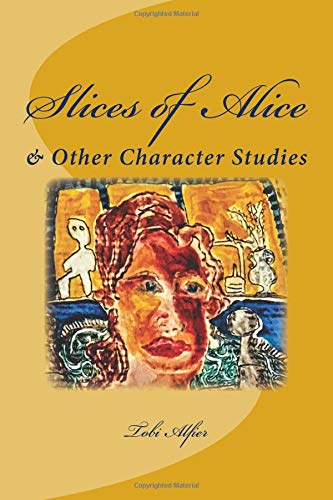
Tobi Alfier's most recent collection of poetry is Slices Of Alice. She is also co-editor with Jeff Alfier of the San Pedro River Review. Don't miss Tobi's columns on the craft of poetry: insert your email address in the "Follow By Email" box to the right of this article and you'll be notified every time a new article appears.


Monday, May 4, 2020

Brenda Littleton - Writing in the Time of Covid


A Day’s Journey  March 10, 2020

Sailing Dodds
I feel a strong deja vu, as if I've stepped into the waters of a moving stream from the 1200's.

Living my own version of "Love in the Time of Covid," I've named this space the Dark Ages 2.0.

Cloistered in our monkish ways, I have Hildegard of Bingen playing, I wash myself in rose water and thieves oil, I write letters with sealing wax, and threads of silk hang from my braided hair. I realize it has always been like this . . . moments can make such a difference in reality. Nothing has ever been secure, permanent, dependable. 

Believing in things to work, in systems to protect, in values to rely upon, are constructs to dress the Ego in protection. The profession, the education, the stock portfolio, the health plan, the home (s), the steps of consumption, the political leanings, the lists of what is unacceptable, the behaviors of bias and PC prejudices, all fixings of placating too much open space of making the unknown, doable. 

Adapting to social conventions and working within cultural norms will work, until it doesn't. When Ego falls short, when the belly of fear knows it can't go the distance, it can't fight or flee away back into balance, a reckoning release waits for the invitation of Soul to now show the way back to home, back to Self. There is an opening here for true change.

Finding security from watching oneself show up and do the best possible, regardless of the outcome, is a currency of experience required to purchase the next round of reality.

Being who we are, without the dressings of who we thought we were, allows for a creation of a new body of work to balance a deeply taxed Ego.

Become comfortable with the uncomfortable. The renaissance is waiting. 
B. Littleton, Dark Ages 2.0. 


 - - - - - - -

  
A Day’s Journey March 29, 2020

Lincoln Beach
The experience of watching ourselves respond to other peoples’ energetic choices is part of our covid lessons. I am amazed at how inappropriate people can be in the face of rules and norms. It seems as if acting out from defiance is what’s left of their personal power. All they have left available to them is acting out, misbehaving, retaliating, similar to when they were in first grade, where the skill of self-regulation hasn’t yet soaked in. 

There is a big blue house on my corner that is always a place for old, dismantled cars, several motorhomes, crumpled, rusty storage containers, dirt bikes and multiple families who arrive one weekend, and stay for several months. Yesterday, they were giving rides on a quad-like cart up and down the road in front of my house . . . for several hours. Whining-gear-shifting-bubbling exhaust-dirt-flying layered clouds of echo-y distant-rapidly approaching-roar of grinds grate my ears, my home space behind doors, and ratchet up stress interference like a whip lightning rod tossing all it has within my little pocket of place in this world. 

Right when I think the ascot race has ended, they circle back for another lap. Without even thinking, I snap. I grabbed my phone, turned on the video and started to film them, as I stood in the middle of the road. When they came close, I stopped them and heard myself pontificating about how they are treating the neighborhood roads as if it was a go-cart track. The young woman driving spoke English, but the other passengers looked away, seemingly as if they wanted to be invisible. I talked about their loud cart, and how they obviously were not aware of how their choices to use the road as entertainment, created dirt, dust, and abnormal noise for the neighbors. I went on and on. 

I reined myself in when I realized I was using this experience as a projection for all of the abuse going on from the place of fear. I was angry, but mostly I had a tone of incredulousness, of why are you treating this peaceful place like it’s a dirt track? Yet, this neighbor hadn’t a clue why her actions were unbearable for me. I felt entitled to bitch to her, and I felt classist in that I knew I held a subtle power: if I went to the authorities in any way, a house of undocumented Mexicans would be investigated. She promised she would not drive down this section of road with her quad-cart. 

Yet, less than an hour later, the vehicle was once again racing in front of my house. I was out with the horses, so I couldn’t see who was driving, but again, my elitist self knew some male pumped up with territorial testosterone was behind the wheel, doing what he could do: lash out in defiance, punish me the only way he could, and retaliate in this feeble, and predictable way. Her male protector was doing what he could to reclaim her honor. I felt sad. I knew I had frightened the young woman, and this is not who I wanted to be. 

Last night, I pondered my level of self-regulation, my sense of lashing out, my limits of agency, my own need to punish. I even wondered if I was in some way jealous that my neighbors were playing in the street, and I hadn’t been invited into the inner circle. But, no, I don’t want to play with them. I do realize I want them to live like me: respectful of noise boundaries, respectful of how my actions affect people, animals, and plants around me; and be courteous to not contributing to higher levels of stress and anxiety. 

I would be happier if we shared similar values in use of space. Yet, my sense of rightness did exactly unto my neighbor what I felt was being dumped onto me. In Jungian practice, one goal is to reach the understanding of where rests the balance, whether the balance is in conflict or in equanimity. In other words, the level of hurt felt by one part of the relationship equals to an exact level of hurt in the opposite partner. The terms can be substituted: hurt for hurt; entitlement for entitlement; assumption for assumption; fear for fear. 

It’s a new day, and it has been a quiet morning. The cactus wren is harping for a mate. A raven croaks to my coyote-dog; horses out in the field eat spring shoots. I watch news clips from New York City hospitals, and read emails saturated with recipes for healing frequencies, prayers, and safety protocols. Carolyn Myss’s words from last night’s webinar hang in my head: it’s time to break through, do not break down. 

These covid lessons are showing me how my rules and norms in the face of current times are my version of self-regulation. May I break on through to the other side with new ways of my own first grade self to play nice: ways of compassion and patience, understanding and tolerance. 

Time to play Jim Morrison . . . Loudly. I wonder if my blue house neighbors will hear me. 

Love to you in this time of Covid!

Brenda Littleton Dark Ages 2.0


- - -


The artwork, Sailing Dodds and Lincoln Beach are original pieces by Brenda Littleton. Writer, poet, professor, literacy of place, Jungian archetypal psychology, equine psychology, alchemy, dream-tending, community, meaning-making, working with gold, silver threads and silk. Born the backside of Vancouver Island; renewed on the black beach of Santorni; risen from ashes in Aguanga; tenderly unfolded in Topanga, busting wide high with inner sky in Joshua Tree.

Saturday, May 2, 2020

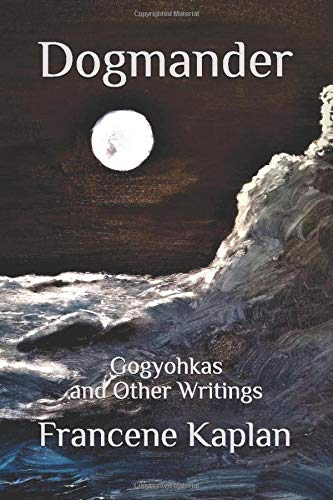
New Book! Dogmander: Gogyohkas and Other Writings by Francene Kaplan


Observations Commentary and Questioning!

Dogmander presents Gogyohka and other poetry forms, with factual and fictional short stories. How do we get to where we are in life? Grit, chance, happiness, life cycle situations and responsibilities, questioning life’s crossroads, acquisition and loss all contribute to our being.

Francene’s perspective of desert culture is described depicting the woman who works at the dump, the local swap meet, the art of pack rats, extreme environmental conditions, how the desert changes people and how people change the desert.

This entertaining book of life includes full sections on animal life, canine personalities and true science fiction poetry.

Francene includes commentaries embrace starting, working in, and ending her career; reflections on society (past and present); not being understood by anyone; epiphanies and paradigm shifts; and yes, things that just piss her off!

BIO:

Francene, a native Californian and desert lover, enjoys writing poems and short stories when not playing household percussion or creating weird mixed–media art. She loves all things animal, vegetable, and mineral, reading / watching Sci Fi, and organic gardening. Attaining far too much formal education, she thus shares tidbits of this knowledge to alternative high school students. She teaches science, psychology, sociology, health, and foods. Teaching composting workshops to communities in Southern California, has earned her the moniker of the "Priestess of Rot".


Click here to purchase your copy on-line!


Tobi Alfier - Mid-Life Crisis in Quarantine


Meet Big Marv. He’s my dad. He’s about 5’ 10’ and weighs as much as one of my legs, but he’s called Big Marv because he used to belong to a gym where there was a littler Marv.

When he had his first mid-life crisis, he didn’t buy a Corvette. He didn’t buy a boat. He took a ceramics class. I have a bank he made me—he says it’s a bank. It looks more like a whale.

Now whether it’s mid-life crisis #2 or just being quarantined, he and my mom are still taking the dog for long walks, they’re still going to the dog park and maintaining social distance, but now that he has his shoulder-to-hand cast off (the result of their dog not wanting to maintain social distance), Big Marv has found himself a new hobby…cooking.

Acquiring 
cookbooks 
and magazines:

There are more opportunities to acquire these and other books besides buying from the “Big One”. Our beloved independent bookstores, while not able to open for browsing, are still probably open for mail order. The trick is finding the information on their websites, which may or may not have been updated.

Here is the address for Space Cowboy Books on-line bookstore:


These stores still have bills. They still have taxes to pay. And truthfully, some of them will close and never reopen. But we’re writers. And readers. And artists. We may need things we can get from our beloved local stores. So please try not to forget about them. Even if we’re not walking past their open doors on the way to our monthly Open Mics. For those who don’t live near Joshua Tree, you can support your own local bookstore by going to the main page of bookshop.org and entering your zip code. 

So yeah, Big Marv is reading Cooking Light and Bon Appetit, and cooking for my mom. Which is kind of funny because she’s a GREAT cook!!!  And she has TONS of cookbooks!!!

According to my dad, after reading his new magazines:

“I used your mom’s recipe for Oatmeal pancakes.
2 cups of milk
1/3 cup salad oil (I substituted butter)
3/4 cup flour
2 1/2 tsp baking powder
1 1/2 cups of uncooked oats

2 eggs
2 T sugar (I substituted brown sugar)
1 tsp salt

I also added:
1/2 tsp cinnamon
1 cup toasted walnuts

I had them for breakfast this morning with sliced bananas and syrup. Yum.
XOXO”

This is my dad who burnt his eyelashes off blowing out a tortilla that caught fire in the toaster oven!! My dad who doesn’t realize there’s more to a recipe than the ingredients. So yes, he has cooking magazines.

What else can we get at the local bookstore?

Our store is different than yours, of course, but here are some of the things we can get by mail order:

Gift bags and tissue paper – If you read last week’s blog, know that my gift wrapping skills are the same as my sewing skills. Non-existent. Still, a gift isn’t a gift unless it’s wrapped. I’m thankful that pretty bags and matching tissue count as wrapping these days.

Gift cards – It’s not just about Christmas, there are graduations and birthdays all year long. Even though we’ve all done it, we’re not supposed to send cash in the mail. So send a gift card and make sure the website is somewhere on your card.

BOOKS! – Every single Facebook friend has a new book coming out. Some, like mine, are only available from the publisher (or directly from me).

Last year you may have voted in the contest to decide what color the cover would be when Rich republished “Sanity Among the Wildflowers”, my very first chapbook ever. I just ordered thirty-five copies from Space Cowboy Books.* If you’d like a copy, please put your email address in the comments below. OR - of you prefer, go to my facebook page (click here) and message me. I’ll contact you for your name and address, and send you a copy of my new book too. And thank you.

*Editor butting in note: Tobi could have ordered from the printer at deep discount, but in these times she made the very cool decision to order the book at retail cost through the bookstore as a cool method of receiving her books and helping the bookstore at the same time. This means she had to pay extra for tax, shipping, and per book cost; but she felt strongly that helping the bookstore was a good way of keeping the economy moving along. Tobi is a hiding-in-the-background hero. So, to "the rest of the story..." 

Calendars – When I supervised a team, I got them calendars based on their personalities. It was a ton of fun trying to figure out who would be the best choice for what. And if you’re like Jeff and I, we buy our calendar super early to write down when submission windows open.

Puzzles!!!!! – I see your pictures on Facebook. Nothing wrong with working on a thousand-piece puzzle in good daylight.

Board Games, dominoes, decks of cards, Tarot cards – these make great pieces for collages and all sorts of cool art. My art skills are about the same as my sewing and gift-wrap skills, but if I were artistic, I’d TOTALLY steal pieces from games and use them!!

Let’s talk about browsing:

We’re all kind of rolled under the bus right now. We can’t browse.  Dang it.
Most important? If you have a big dog and you’re a little person, please be careful. Being in a full-arm cast in hot weather is not comfortable. You won’t be able to make pancakes, most art, or comfortably use a keyboard until the cast comes off.

I’ll watch the comments and contact you for your address so I can send you a book. It will be my pleasure to send you something to read while you’re hanging out and stuck at home. Have a good week. Just because April’s over doesn’t mean the poetry stops. Oh, and if you don’t use all the bananas on your pancakes? Make banana bread. It’s so easy even I can make it. xo

- - - -


Tobi Alfier's most recent collection of poetry is Slices Of Alice. She is also co-editor with Jeff Alfier of the San Pedro River Review. Don't miss Tobi's columns on the craft of poetry: insert your email address in the "Follow By Email" box to the right of this article and you'll be notified every time a new article appears.